
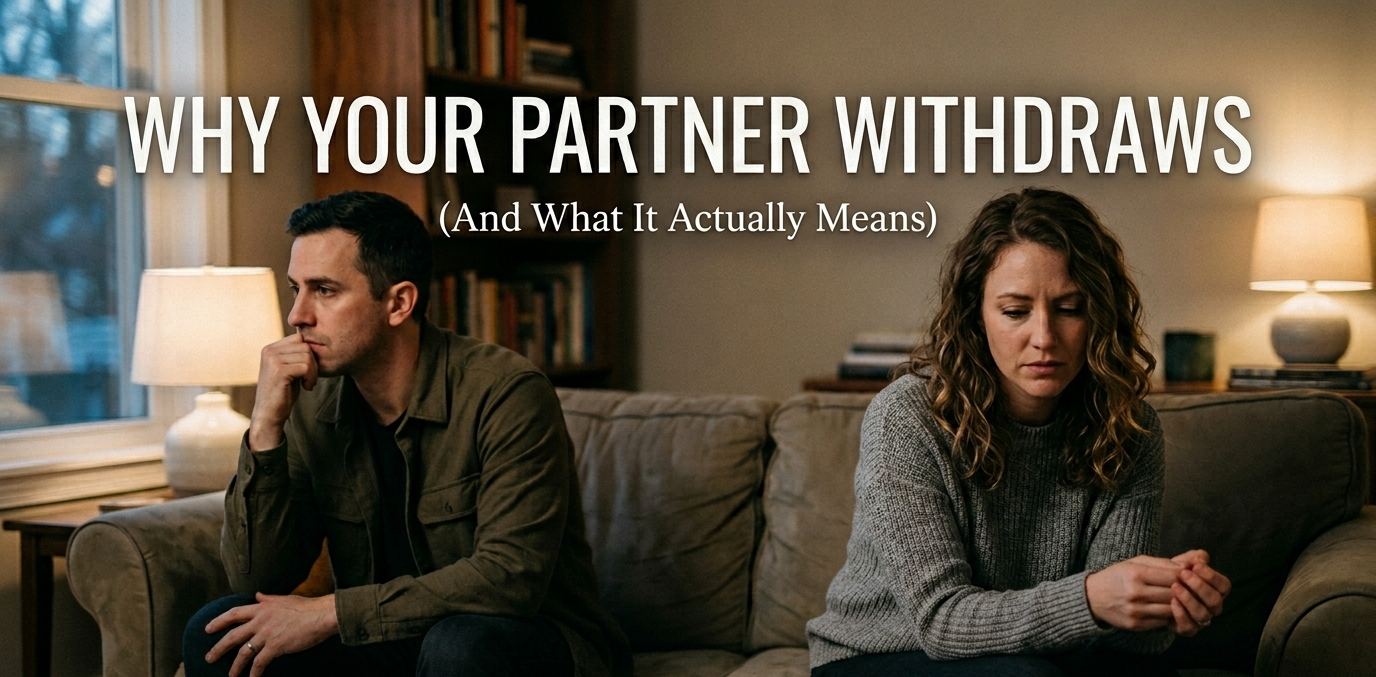
If your partner has ever suddenly pulled away, gone quiet, or seemed emotionally distant, you’ve likely felt it immediately.
That tightening in your chest.
The overthinking.
The question that keeps looping:
“Did I do something wrong?”
It’s one of the most painful dynamics in a relationship. And yet, in most cases, it’s also one of the most misunderstood.
The Truth Most People Miss
Withdrawal is rarely about rejection.
It’s about regulation.
When someone pulls away, it’s usually because their internal emotional system is overwhelmed, not because they’ve stopped caring about you.
This distinction matters. Because how you interpret their behavior will determine how you respond—and whether the relationship strengthens or breaks under pressure.
Why Your Partner Pulls Away
1. Emotional Overload
Sometimes, your partner simply doesn’t have the capacity to engage.
Stress from work, anxiety, unresolved thoughts, or even emotional exhaustion can push someone into shutdown mode.
This isn’t avoidance.
It’s protection.
They are trying to stabilize themselves before they can reconnect.
2. Fear of Conflict
For many people, especially those who didn’t grow up with healthy communication, conflict feels dangerous.
So instead of engaging, they withdraw.
Not because they don’t care.
But because they don’t feel safe navigating the conversation.
3. Fear of Being Misunderstood
If someone has previously felt judged, criticized, or dismissed when expressing themselves, they learn quickly:
“It’s safer to stay quiet.”
Withdrawal becomes a defense mechanism against emotional risk.
4. The Need for Space (Not Distance)
Some individuals naturally require more space to process thoughts and emotions.
This is especially common in people with avoidant tendencies, where closeness can sometimes feel overwhelming rather than comforting.
Space, in this context, is not disconnection.
It’s how they maintain balance.
The Biggest Mistake Most People Make
When faced with withdrawal, the instinct is to move closer.
Ask more questions.
Push for answers.
Demand clarity.
But this often does the opposite of what you want.
It increases pressure.
And pressure reinforces their need to withdraw.
What Actually Works: A Better Response
1. Stop Making It About You
This is the hardest shift, but also the most important.
Instead of asking, “What did I do wrong?”
Ask, “What might they be going through?”
This simple reframe reduces anxiety and changes your entire approach.
2. Communicate Without Pressure
A calm, simple statement is enough:
“I notice you’ve been quiet. I’m here when you’re ready to talk.”
No pressure.
No urgency.
No emotional demand.
This creates safety instead of tension.
3. Respect Their Space
Giving space does not mean losing connection.
It means trusting that connection can return without force.
When someone feels their boundaries are respected, they are far more likely to come back willingly.
4. Regulate Yourself First
Your ability to stay grounded matters more than anything you say.
Focus on your own routines.
Your work.
Your health.
Your emotional stability.
A regulated partner creates a safe environment for reconnection.
What Withdrawal Is Really Saying
Withdrawal is rarely silence.
It’s communication in a different form.
It can mean:
- “I’m overwhelmed.”
- “I don’t feel safe expressing this yet.”
- “I need time to process.”
- “I don’t know how to say what I’m feeling.”
When you learn to hear what’s underneath the silence, everything changes.
The Opportunity Hidden in Distance
Moments like these can either create distance…
Or deepen the relationship.
When you respond with patience, emotional maturity, and understanding, you show your partner something powerful:
That the relationship is safe, even when things feel uncertain.
And that is what allows real intimacy to grow.
When You Need Support
If withdrawal has become a repeated pattern in your relationship, it’s often a sign of deeper dynamics that need to be understood and addressed.
Working with a trained professional can help you both:
- Communicate more effectively
- Understand each other’s emotional patterns
- Rebuild trust and connection
At Love and Intimacy, Erin A. Alexander, LPC-S, Clinical Sexologist, helps individuals and couples navigate these exact challenges with a compassionate, research-based approach.
Final Thought
Your partner’s withdrawal is not always a wall.
Sometimes, it’s a signal.
And how you respond to that signal determines whether you push them further away… or become the reason they feel safe enough to come back.
