
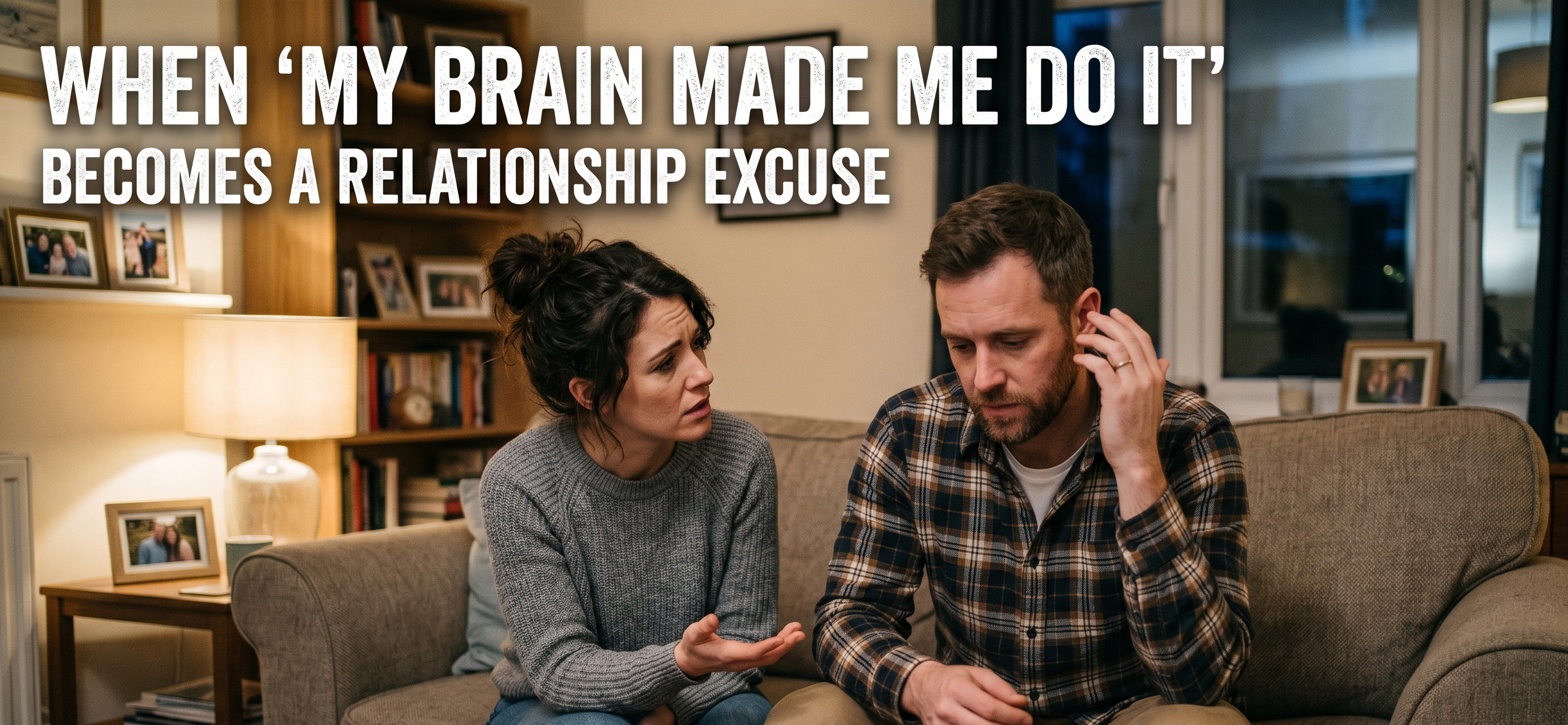
Let’s address something uncomfortable but very real.
You’re trying to have a serious conversation with your partner. Maybe it’s about responsibilities, emotional connection, or basic respect. And instead of accountability, you hear:
“That’s just how my brain works.”
At first, it sounds fair. Compassion kicks in. You don’t want to invalidate mental health.
But over time, something feels off.
Because instead of progress, you’re stuck.
And that’s where the problem begins.
Mental Health Is Real, But So Is Responsibility
Let’s be clear.
Conditions like ADHD, anxiety, depression, and others are real. They deserve understanding, proper diagnosis, and support.
But here’s the truth most people avoid:
A condition can explain behavior. It does not excuse it.
That distinction changes everything.
The Hidden Pattern That Destroys Relationships
Take a common scenario.
One partner struggles with focus, organization, or emotional presence. The other starts picking up the slack.
At first, it feels like support.
Then it becomes imbalance.
Then resentment.
And eventually, it turns into a silent contract:
- One person stops trying
- The other becomes exhausted
This isn’t about the condition anymore.
It’s about effort vs avoidance.
As described in your original case study , the real issue isn’t the behavior itself. It’s when the explanation becomes a shield against growth.
Explanation vs Excuse: The Line Most People Cross
Here’s the difference that determines whether a relationship survives or slowly breaks.
Healthy Explanation
“I struggle with this because of how my brain works. Let me build a system to improve.”
Unhealthy Excuse
“This is just how I am. You need to deal with it.”
One creates solutions.
The other creates distance.
Why This Dynamic Is So Dangerous
When one partner repeatedly avoids responsibility:
- The other starts overcompensating
- Respect begins to erode
- Communication becomes passive-aggressive
- Small issues turn into emotional explosions
It’s not about laundry, missed calls, or forgotten plans.
It’s about feeling unseen and unsupported.
And once that feeling sets in, relationships don’t fail suddenly.
They fade slowly.
What Actually Fixes This
Most advice online is soft. It tells you to “communicate better” or “be more understanding.”
That’s incomplete.
Here’s what actually works:
1. Get Proper Clarity, Not Self-Diagnosis
If there’s a real issue, it needs a real diagnosis and structured management.
Guesswork leads to excuses.
Clarity leads to action.
2. Build Systems, Not Sympathy
Support doesn’t mean lowering standards.
It means creating systems:
- Reminders
- Schedules
- Task swaps
- External help if needed
Effort must be visible.
3. Replace Blame With Ownership
The most powerful shift is this:
“If I can’t do it, I’m still responsible for solving it.”
That mindset alone separates functional relationships from broken ones.
4. Stop Passive-Aggressive Coping
Ignoring problems or trying to “teach a lesson” never works.
It just builds frustration.
Direct, calm, structured conversations win every time.
The Real Truth Most People Avoid
Love is not just acceptance.
Love without effort becomes neglect.
If someone consistently hides behind their struggles without working on them, they’re not protecting themselves.
They’re slowly damaging the relationship.
Final Thought
A healthy relationship doesn’t require perfection.
But it does require effort from both sides.
Because at the end of the day:
It’s not about how your brain works.
It’s about what you’re willing to do about it.
