

As a Clinical Sexologist and Licensed Professional Counselor, I often work with individuals and couples navigating the complexities of narcissistic relationships. These dynamics can feel emotionally draining, confusing, and, at times, impossible to sustain. Yet, understanding the patterns of narcissism, and learning how to respond with clarity and strategy, can help reclaim your sense of peace, safety, and self-worth.
What Is Narcissistic Personality Disorder (NPD)?
The official diagnostic term for narcissism is Narcissistic Personality Disorder (NPD). According to the American Psychiatric Association’s DSM-5, a licensed clinician can diagnose NPD when at least five of the following traits are present:
- An exaggerated sense of self-importance
- Obsession with fantasies of success, power, or ideal love
- Belief they are “special” and can only be understood by high-status people
- Constant need for admiration
- Sense of entitlement
- Exploitative behavior in relationships
- Lack of empathy
- Envy of others or belief that others envy them
- Arrogant or dismissive attitude
Red Flags in Narcissistic Relationships
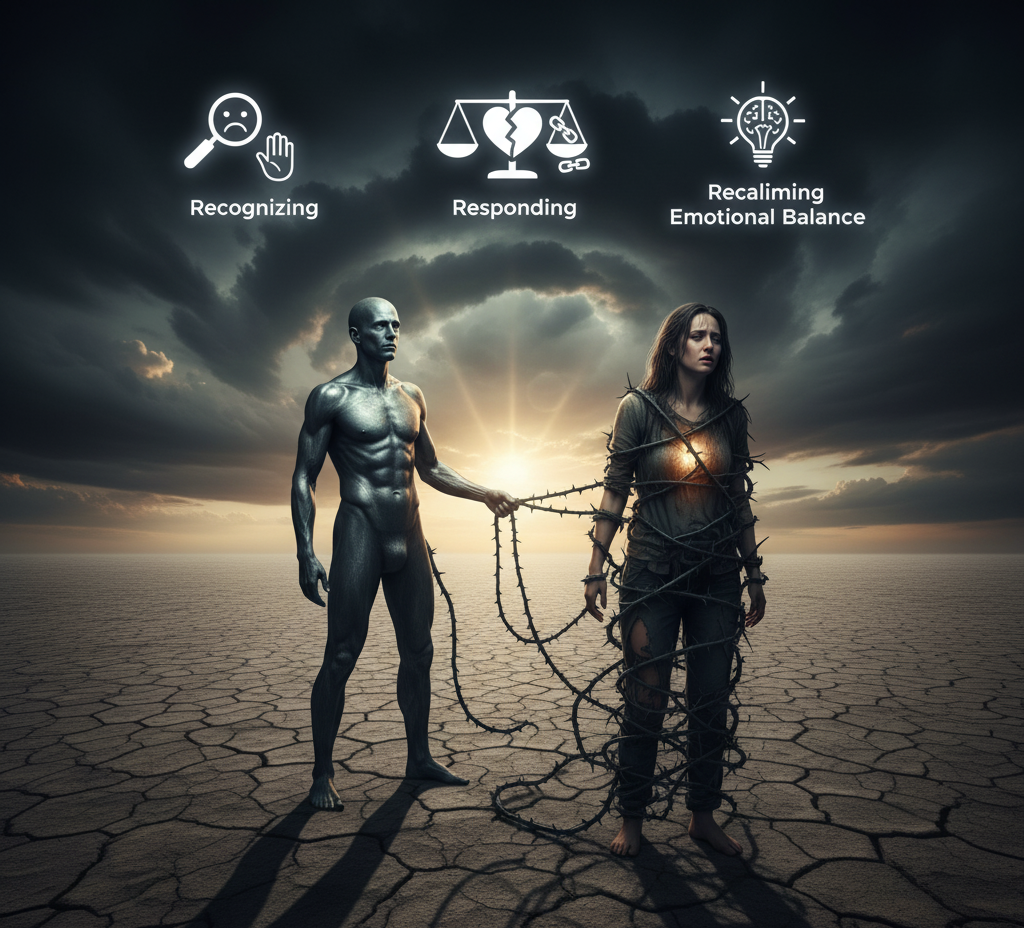
At first, a relationship with a narcissist may feel magnetic, charming, exciting, even too good to be true. But as the emotional layers unfold, patterns of control and manipulation often emerge.
Watch for these warning signs:
- Moves the relationship forward too quickly
- Excessive flattery and charm early on
- Isolation from friends, family, or activities
- Disregard for boundaries or privacy
- Possessive or jealous behavior
- Constant monitoring or checking your phone
- Verbal put-downs or emotional abuse
- Shifts blame for everything that goes wrong
- Uses your emotions, finances, or vulnerabilities as leverage
- Displays anger privately but calmness publicly
- Uses humiliation, threats, or guilt to maintain control
These behaviors aren’t about love, they’re about dominance, insecurity, and control.
Common Cognitive Distortions Used by Narcissists
Narcissists often rely on mental and emotional manipulation tactics to maintain control. Some of the most common include:
- Gaslighting (making you question your reality)
- Lying and Deflection
- Playing the Victim
- Anger and Intimidation
- Conflation (blurring facts to distort truth)
These tactics can slowly erode your confidence and sense of reality.
Traits Often Seen in Partners of Narcissists
Those in relationships with narcissists frequently exhibit symptoms similar to survivors of emotional or domestic abuse. Common patterns include:
- Chronic self-doubt and anxiety
- Believing the abuser’s negative statements
- Isolation from support networks
- Walking on eggshells to avoid conflict
- Defending or making excuses for the abuser
- Depression, low self-esteem, and fear
Recognizing these symptoms is the first step toward empowerment and healing.
Clinical Approaches for Managing Narcissistic Behavior
Mental health professionals use structured communication techniques when working with clients who exhibit narcissistic traits. These methods maintain boundaries and reduce manipulation:
- Stay Composed: Remain calm, maintain eye contact, and do not back down.
- Stick to Facts: Reflect their own words to expose inconsistencies.
- Affirm Selectively: Acknowledge only factual statements.
- Interrupt Lies or Gaslighting: Calmly correct misinformation.
- Control the Conversation: Keep discussions focused and brief.
- Limit Personal Disclosure: Avoid sharing private details that may be weaponized.
- Acknowledge Emotions, Then Redirect: Recognize feelings briefly, then return to the main issue.
These techniques are grounded in maintaining neutrality, emotional distance, and self-protection.
Tips for Individuals in Relationships with Narcissists
If you are currently in such a relationship, these strategies may help you maintain emotional safety and regain control:
- Communicate Briefly and Clearly: Keep conversations short and specific.
- Stay Emotionally Neutral: Avoid reacting to provocations.
- Don’t Challenge Their Ego: Focus on outcomes, not validation.
- Avoid Arguments: Narcissists seek control, not understanding.
- Listen Strategically: Hear their words, not just their emotions.
- Maintain Eye Contact: Project strength and confidence.
Boundaries are not selfish, they are necessary for survival and self-respect.
Recommended Reading
Disarming the Narcissist: Surviving and Thriving with the Self-Absorbed by Wendy T. Behary
An essential guide for understanding narcissistic dynamics and developing tools to protect your emotional health.
Final Thoughts

Narcissistic relationships often blur the line between love and control, leaving you questioning your worth and reality. Recovery begins with education, awareness, and the courage to reclaim your boundaries.
If you find yourself in a relationship with someone displaying these patterns, know that help is available. Seek professional support, surround yourself with trusted people, and remember: healing from narcissistic abuse is not only possible, it’s transformative.
