
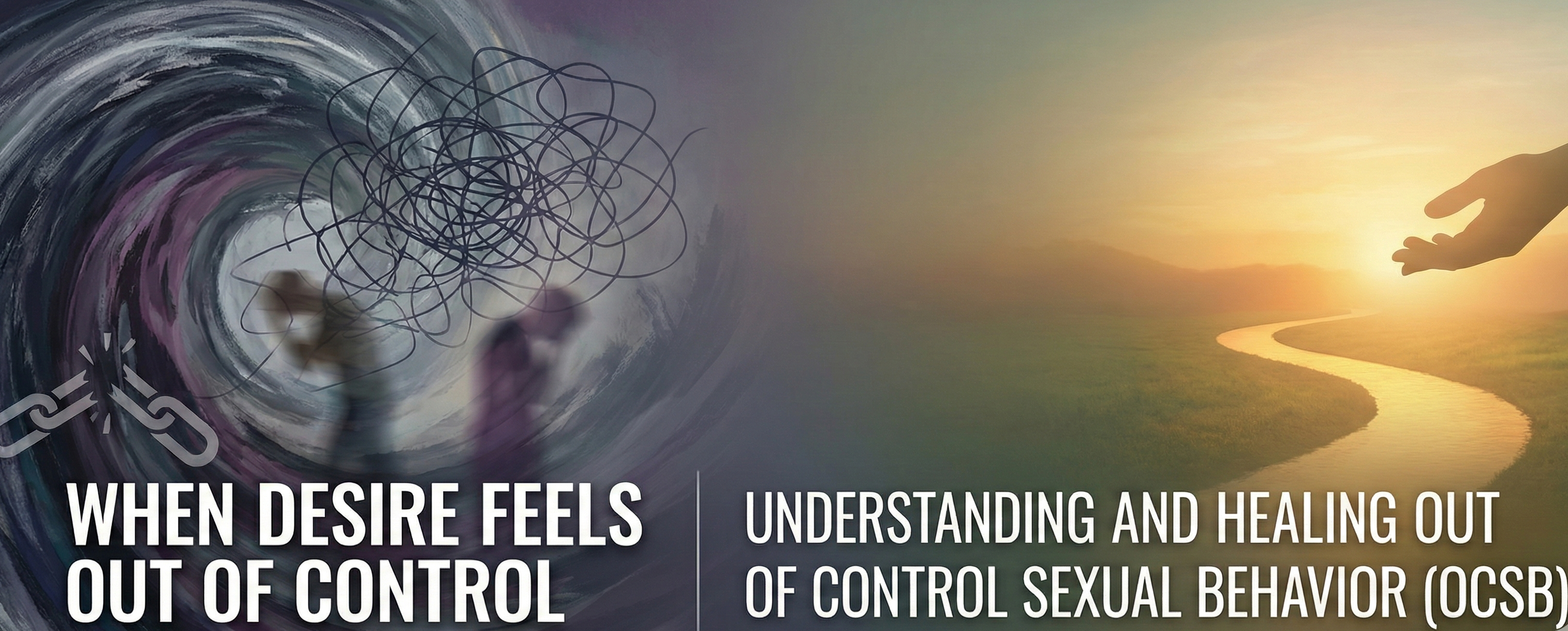
When was the last time a thought, urge, or habit felt bigger than your ability to manage it?
For some, this experience shows up in their relationship with food, work, substances, or screens. For others, it shows up in their sexual life. This is where the term Out of Control Sexual Behavior (OCSB) comes in.
OCSB describes a deeply distressing experience where consensual sexual thoughts, urges, or behaviors begin to feel compulsive, unmanageable, and misaligned with one’s values. It is sometimes referred to as compulsive sexual behavior, hypersexuality, or sex addiction. While not a formal DSM diagnosis, it is a very real and clinically recognized struggle that affects emotional health, relationships, and self-worth.
This is not about morality.
It is about loss of agency, inner conflict, and the longing to live in alignment again.
What OCSB Can Look Like in Real Life
OCSB often follows a pattern of escalation and loss of control:
1. Escalating Behavior
What once felt occasional becomes consuming.
For example, watching pornography at night slowly turns into spending entire days preoccupied with it, or needing more extreme stimulation to feel satisfied.
2. Reckless or High-Risk Activity
Impulsivity increases. Judgment decreases.
This may include unsafe sexual practices, mixing sex with substance use, or engaging in dangerous behaviors that place physical and emotional health at risk.
3. Behavior That Conflicts With Core Values
The deepest pain often comes here.
People act in ways that go against their personal, relational, spiritual, or cultural values, leading to shame, secrecy, and inner fragmentation.
4. Subjective Loss of Control
The defining feature is not frequency, but powerlessness.
“I don’t want to do this… but I can’t seem to stop.”
The Three Phases of Healing: Regulation, Reprocessing, Reconstruction
Recovery from OCSB is not about suppression. It is about integration, self-leadership, and rebuilding coherence.
1. Regulation – Learning to Pause and Self-Soothe
This phase focuses on impulse control and nervous system stability.
The goal is to develop the ability to:
- Tolerate emotional discomfort without acting it out sexually
- Identify triggers such as stress, loneliness, boredom, rejection, or shame
- Create a pause between urge and action
This is where tools like breathwork, mindfulness, grounding, exercise, and emotional literacy become essential.
2. Reprocessing – Healing the Roots of Compulsion
Compulsive sexual behavior is rarely about sex alone.
It is often an attempt to regulate:
- Trauma
- Attachment wounds
- Emotional neglect
- Core beliefs of unworthiness
- Chronic anxiety or depression
Through therapy and trauma-informed work, individuals begin to:
- Reframe shame-based identity stories
- Process unresolved emotional pain
- Replace distorted beliefs with self-compassion and reality-based thinking
3. Reconstruction – Building a Life of Sexual Integrity
This is the phase of meaning, identity, and aligned living.
Here, individuals:
- Define what healthy sexuality means for them
- Build relationships based on transparency and emotional safety
- Learn to experience desire without being controlled by it
- Create a life rich in purpose, connection, and self-respect
This is where sexuality becomes integrated into the self, rather than used to escape from it.
Short-Term Goals That Build Long-Term Freedom
Recovery begins with practical, compassionate structure:
- Identifying personal triggers and emotional patterns
- Creating clear guardrails and accountability systems
- Learning stress regulation and emotional communication skills
- Developing healthy relationships and social support
- Engaging in sex-positive education that removes shame but preserves boundaries
- Participating in individual and, when appropriate, couples therapy
- Rebuilding trust with oneself and others through transparency and consistency
Progress is often measured in milestones:
3 months of aligned behavior, then 6, then 12.
Not as pressure, but as evidence that inner coherence is returning.
From Compulsion to Coherence
At its core, OCSB is not a failure of willpower.
It is a call for integration.
When the nervous system is overwhelmed, when identity is fractured by shame, when connection feels unsafe, the psyche seeks regulation wherever it can find it. Sexuality becomes a tool for soothing, escaping, or numbing.
Healing is the process of learning to meet those same needs with:
- Awareness instead of avoidance
- Presence instead of dissociation
- Self-compassion instead of self-judgment
- Choice instead of compulsion
Healing from Out of Control Sexual Behavior is not about suppressing desire or labeling oneself as broken. It is about learning to live in alignment with your values, regulating your nervous system, and reconnecting with your sense of agency, intimacy, and self-worth.
True recovery is the journey from compulsion to coherence. From shame to self-understanding. From fragmentation to wholeness.
This is the work of rebuilding intimacy with yourself first, so that intimacy with others can become conscious, safe, and life-giving.
If this topic resonates with you and you are seeking a sex-positive, trauma-informed, and integrative approach to healing and growth, you can explore more resources, insights and therapeutic perspectives at www.loveandintimacybyerin.com
