
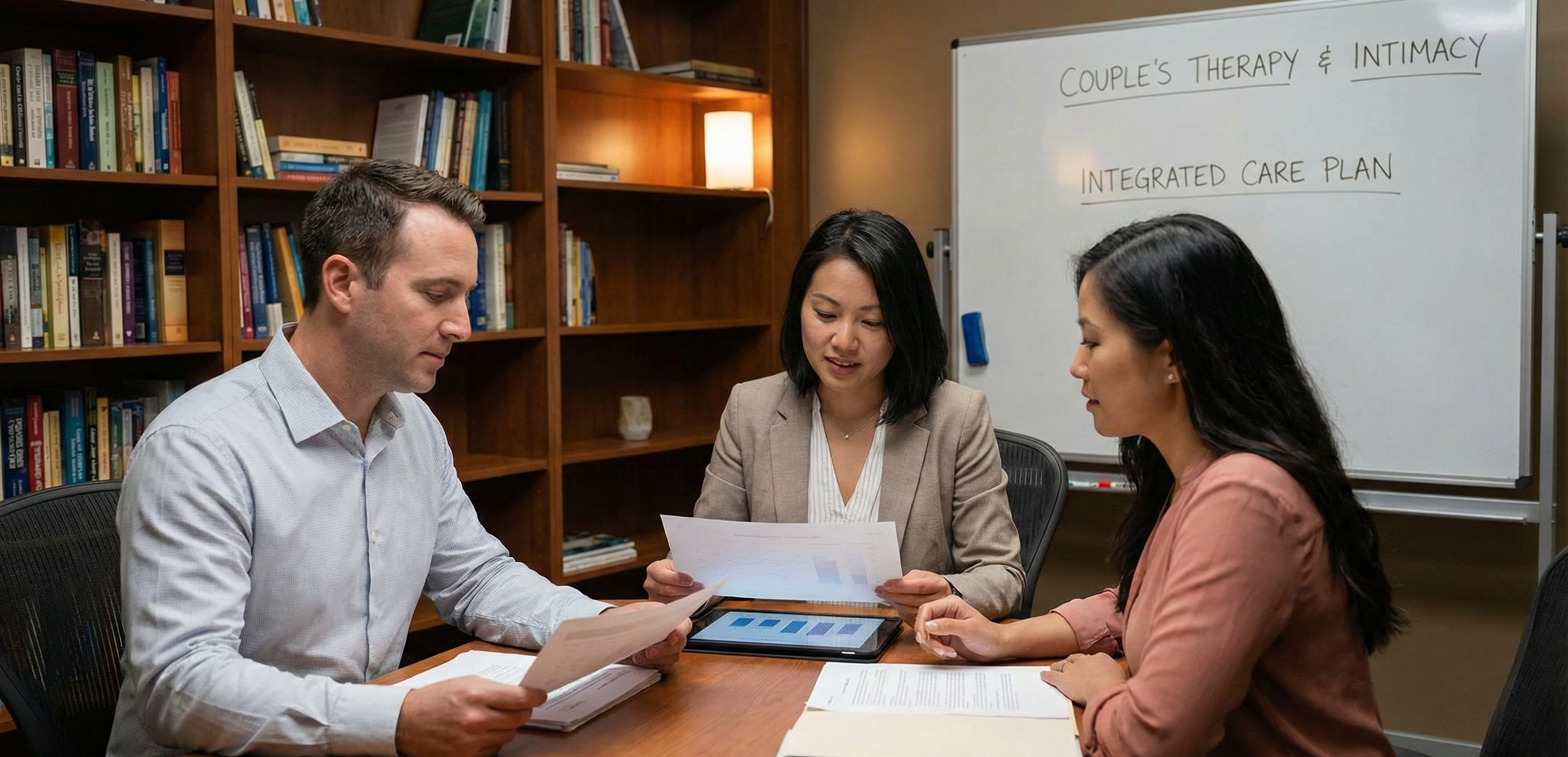
When individuals or couples seek support for deeply personal concerns, whether related to mental health, sexual health, or medical conditions, the quality of care they receive depends on more than just one professional’s expertise. True, effective care emerges when professionals collaborate across disciplines, creating a comprehensive and supportive framework that prioritizes the client’s full well-being.
Collaboration between mental health professionals, sexual health specialists, and medical practitioners is not optional. It is essential, particularly when clients are navigating complex, emotional, and sensitive experiences.
Why Collaboration Matters
Many challenges do not exist in isolation. Emotional distress can affect physical health. Medical diagnoses can deeply impact identity, relationships, and mental well-being. Sexual health concerns often carry emotional, psychological, and relational weight.
A collaborative approach ensures that no aspect of the client’s experience is overlooked.
Creating a Safe and Trusting Environment
One of the most powerful outcomes of professional collaboration is the creation of a safe and trustworthy environment. When clients know their care providers are aligned, communicating responsibly, and working toward a shared goal, they are far more likely to open up.
This sense of safety is especially important when individuals are dealing with topics they may feel ashamed, confused, or anxious about. Knowing that their concerns are being addressed holistically allows clients to feel seen, supported, and respected rather than fragmented or misunderstood.
Nonjudgmental, Objective, and Science-Based Care
In areas such as mental health and sexual health, personal beliefs and unconscious bias can unintentionally influence care. Collaboration acts as a safeguard against this.
When professionals work together, there is a shared commitment to:
- Evidence-based practices
- Objective, science-led interventions
- Nonjudgmental communication
This approach protects clients from moral assumptions and ensures that care is rooted in research, ethics, and best practices rather than personal opinion.
An Integrated Support System for the Client
Each professional brings a unique lens and area of expertise.
For example:
- A mental health professional may help process anxiety, trauma, or emotional distress.
- A medical professional can explain physiological conditions, treatments, or diagnoses.
- A sexual health specialist can address intimacy, desire, function, and relational dynamics.
When these perspectives are integrated, clients receive cohesive and well-rounded care. Emotional, physical, and relational dimensions are acknowledged together, rather than treated as separate or unrelated issues.
Optimizing Services and Quality of Care
The ultimate purpose of collaboration is to deliver the highest standard of care possible.
By working together, professionals can:
- Develop more comprehensive treatment plans
- Identify gaps or overlaps in care
- Ensure consistency in messaging and guidance
- Reduce confusion or conflicting advice
For clients, this results in a smoother, more supportive experience that feels intentional and well-coordinated.
The Critical Role of Privacy in Sensitive Topics
When working with issues such as fertility challenges, infidelity, men’s sexual health concerns, or women’s sexual health conditions, privacy is non-negotiable.
Individuals and couples navigating experiences like IVF, endometriosis, erectile dysfunction, or hormonal challenges often carry heavy emotional burdens. Feelings of embarrassment, inadequacy, anxiety, and even trauma are common.
In these moments of vulnerability, the last thing a client needs is:
- Judgment
- Carelessness with personal information
- Unclear boundaries around confidentiality
Strict privacy protocols are not just ethical requirements. They are foundational to trust.
What Clients Should Expect and Ask For
Clients have the right to understand how their information is handled.
When engaging with any professional, it is appropriate and encouraged to ask:
- What are your privacy and confidentiality policies?
- How are records stored and protected?
- Under what circumstances, if any, is information shared with other professionals?
Clear answers to these questions provide reassurance that sensitive information will be treated with the respect and discretion it deserves.
Final Thoughts
Collaboration between mental health, sexual health, and medical professionals is not about complexity. It is about care done right.
When professionals work together with respect, objectivity, and a shared commitment to client well-being, individuals feel safer, supported, and better understood. In spaces where vulnerability is inevitable, collaboration, science, and privacy become the pillars of truly effective care.
