
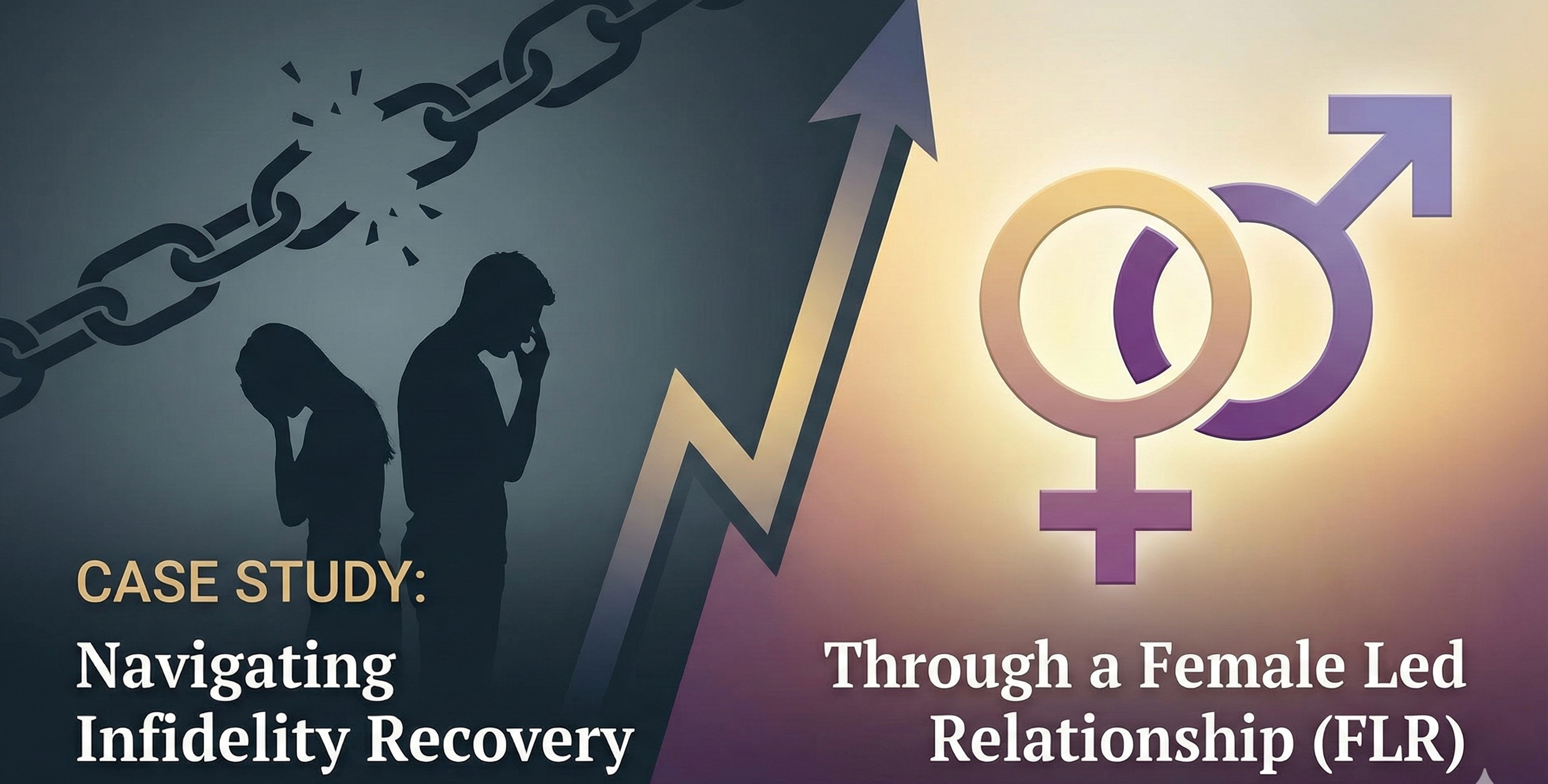
Rebuilding trust after infidelity is one of the most complex emotional processes a couple can face. When betrayal disrupts safety, attachment, and identity within a relationship, traditional counseling models are not always enough.
At Love and Intimacy by Erin, Sexologist Erin Alexander works with couples who are ready not just to heal, but to consciously redesign their relationship dynamic. This case study explores how a committed long-term couple used infidelity recovery work alongside the exploration of a Female Led Relationship (FLR) to create a new foundation rooted in trust, leadership, and emotional security.
Client Overview: Relationship at a Crossroads
Presenting Concern
The couple entered therapy following an incident of infidelity. Their primary goals were:
- Healing emotional trauma and restoring trust
- Understanding the deeper relational patterns that led to disconnection
- Exploring a Female Led Relationship (FLR) as a framework for intentional power balance
- Establishing clearer communication, structure, and emotional safety
Relationship Status
- Long-term, committed partnership
- Both partners motivated for repair, accountability, and growth
- Shared curiosity about FLR as a conscious relationship model rather than a purely erotic dynamic
Understanding the Emotional Context
Through assessment, several core dynamics emerged:
- The partner who engaged in infidelity reported feeling emotionally unseen and constrained within the previous structure.
- The betrayed partner recognized patterns of emotional withdrawal and indirect control rather than open leadership.
- Both partners acknowledged that unclear power dynamics and unmet emotional needs created vulnerability within the relationship.
Rather than viewing the crisis as the end, the couple chose to treat it as an opportunity for relational redesign under the guidance of Erin Alexander’s trauma-informed, intimacy-focused approach.
Phase 1: Infidelity Healing and Trust Restoration
Trauma Processing and Accountability
Individual Therapeutic Work
Betrayed Partner:
- Emotional validation
- Processing shock, grief, and self-worth erosion
- Rebuilding a sense of safety and internal stability
Engaging Partner:
- Full, non-defensive accountability
- Understanding the emotional impact of betrayal
- Identifying unmet needs without shifting blame
Structured Joint Disclosure
A guided disclosure and apology process allowed:
- Honest answers to necessary questions
- Empathetic acknowledgment of harm
- Closure of the interrogation phase
- Establishment of emotional containment
This phase laid the groundwork for authority, safety, and leadership to be re-established in a healthy way.
Radical Transparency Protocol
Transparency became the temporary scaffolding for rebuilding trust.
Technology Boundaries
- Initial full access to devices and accounts
- Long-term: Open phone policy, no secret profiles, no hidden communication
Time and Location Awareness
- Daily check-ins for non-work activities during recovery
- Clear communication around schedule changes and social interactions
Emotional Honesty
- Daily emotional “temperature checks”
- Use of “I feel” statements instead of blame language
- Structured vulnerability practices led by the female partner
Phase 2: Exploring the Female Led Relationship (FLR)
Defining FLR as a Relational Framework
Erin Alexander guided the couple in separating healthy female leadership from:
- Coercive dominance
- Punishment-based control
- Unprocessed power exchange fantasies
Instead, FLR was reframed as:
- Conscious authority
- Emotional leadership
- Decisional clarity
- Devotional safety
Levels of FLR Integration
Emotional and Decisional Leadership
The female partner assumed primary authority in:
- Long-term planning
- Financial direction
- Relational boundary setting
- Emotional climate regulation
This restored a sense of stability and respect following betrayal.
Domestic and Administrative Structure
Clear delegation eliminated unspoken resentment:
- Household management
- Social planning
- Standards of responsibility
- Follow-through expectations
Gradual Power Exchange Exploration
Only after trust stabilization did the couple begin discussing deeper power dynamics, emphasizing:
- Consent
- Psychological safety
- Emotional maturity
- Non-punitive structure
Creating the FLR Relationship Contract
A living agreement formalized the new dynamic.
Leadership Roles
Female Partner
- Final authority on major decisions
- Emotional tone-setting
- Boundary enforcement
- Vision-holder for the relationship
Male Partner
- Advisory input with respect for final decisions
- Active service and task execution
- Financial transparency
- Emotional attunement and responsiveness
Accountability and Devotion as Trust Repair
Daily Devotion Rituals
- Structured emotional check-ins
- Acts of service
- Verbal affirmations of loyalty and respect
- Presence practices
Behavioral Boundaries
Rules focused on:
- Fidelity
- Communication transparency
- Time integrity
- Emotional availability
Consequences were pre-agreed, restorative, and growth-oriented rather than punitive.
Clinical Perspective from Erin Alexander, Sexologist
“Infidelity often exposes hidden power imbalances and emotional starvation. When couples are willing to consciously restructure authority, responsibility, and emotional leadership, healing becomes not just possible, but transformative. FLR, when practiced ethically and intentionally, can provide the containment and clarity many relationships unconsciously seek.”
— Erin Alexander, Sexologist & Founder of Love and Intimacy by Erin
Conclusion: From Crisis to Conscious Design
This case illustrates how:
- Trauma-informed therapy
- Radical honesty
- Structured female leadership
- Clear relational agreements
can transform betrayal into a deeper, more intentional partnership.
For couples seeking not just recovery, but relational evolution, Love and Intimacy by Erin offers a framework where trust, power, and intimacy are rebuilt with clarity, respect, and emotional intelligence.
