
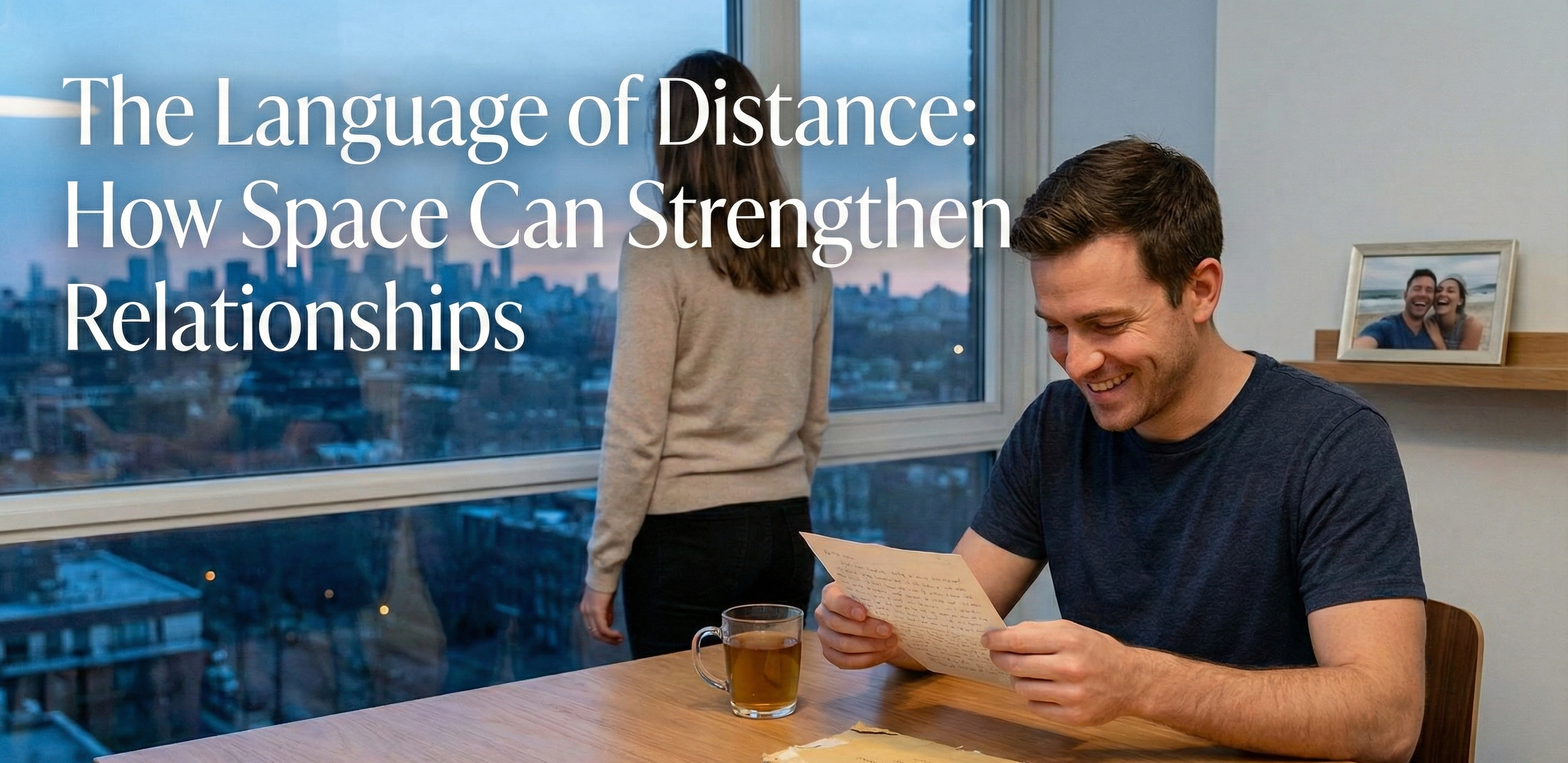
When people talk about love languages, they usually reference words of affirmation, quality time, physical touch, acts of service, or gifts. What often goes unmentioned is distance, the intentional use of space and time apart as a way to support emotional health and deepen connection.
While distance may not be formally recognized as a love language, it plays a vital role in many healthy, long-term relationships. When understood and communicated well, personal space does not weaken intimacy. It strengthens it.
Why Time Apart Can Be Healthy for a Relationship
Intentional space allows both partners to remain grounded individuals rather than emotionally fused. When used wisely, distance offers several powerful benefits.
1. Encourages Independence and Personal Growth
Time apart creates room for individual interests, friendships, and personal development. This independence supports a stronger sense of self, which ultimately benefits the relationship. Partners who continue to grow individually bring renewed energy, insight, and perspective back into the partnership.
2. Renews Appreciation and Desire
Constant proximity can sometimes dull presence. Time apart restores intention. Absence allows partners to miss each other, rediscover appreciation, and re-engage with curiosity rather than routine.
3. Reduces Codependency
Healthy space reinforces healthy boundaries. It helps prevent emotional over-reliance and supports a dynamic where two whole individuals choose connection rather than depend on it for stability or identity.
4. Improves the Quality of Communication
When time together is valued rather than assumed, communication often becomes more meaningful. Conversations feel more present, listening improves, and partners are less likely to take one another for granted.
5. Creates Space for Emotional Regulation
Time alone allows for reflection and emotional processing. This reduces reactivity and supports clearer, calmer communication when partners come back together.
6. Supports Better Problem-Solving
Distance can offer perspective. Stepping away from conflict allows emotions to settle and creates space to approach challenges with greater objectivity and empathy.
How to Communicate the Need for Space Without Causing Disconnection
A request for space can easily be misunderstood if not communicated carefully. Clear, compassionate dialogue is essential.
Choose the Right Moment
Discuss your need for space when both partners are calm and grounded. Avoid bringing it up during conflict or moments of heightened vulnerability.
Use “I” Statements
Frame your needs around your own experience rather than your partner’s behavior. For example, “I recharge best when I have quiet time to myself” feels very different from “You’re always around.”
Explain the Purpose
Help your partner understand that your need for space is about self-care and emotional balance, not rejection or avoidance. Clarify that it ultimately supports the relationship.
Offer Reassurance
Explicitly reaffirm your care and commitment. Many people associate distance with abandonment, so reassurance is critical for emotional safety.
Suggest Practical Solutions
Be specific. This might look like scheduling regular alone time, pursuing individual hobbies, or planning short periods apart. Structure reduces anxiety and builds trust.
Invite Their Perspective
Give your partner space to share how your request feels to them. Healthy boundaries are built through collaboration, not one-sided decisions.
Set Clear Expectations
Discuss how much space you need and what it will look like. Clarity prevents misunderstanding and helps both partners feel secure.
Reconnect Intentionally
After time apart, prioritize reconnection. Presence after distance reinforces that space was restorative, not distancing.
Distance as an Act of Love
Distance is often misunderstood as a lack of care, when in reality it can be an expression of respect, trust, and emotional maturity. Relationships thrive not on constant closeness alone, but on balance.
By learning to communicate and honor the need for space, couples can cultivate deeper intimacy, stronger individuality, and a more resilient partnership that grows over time rather than suffocates under pressure.
