
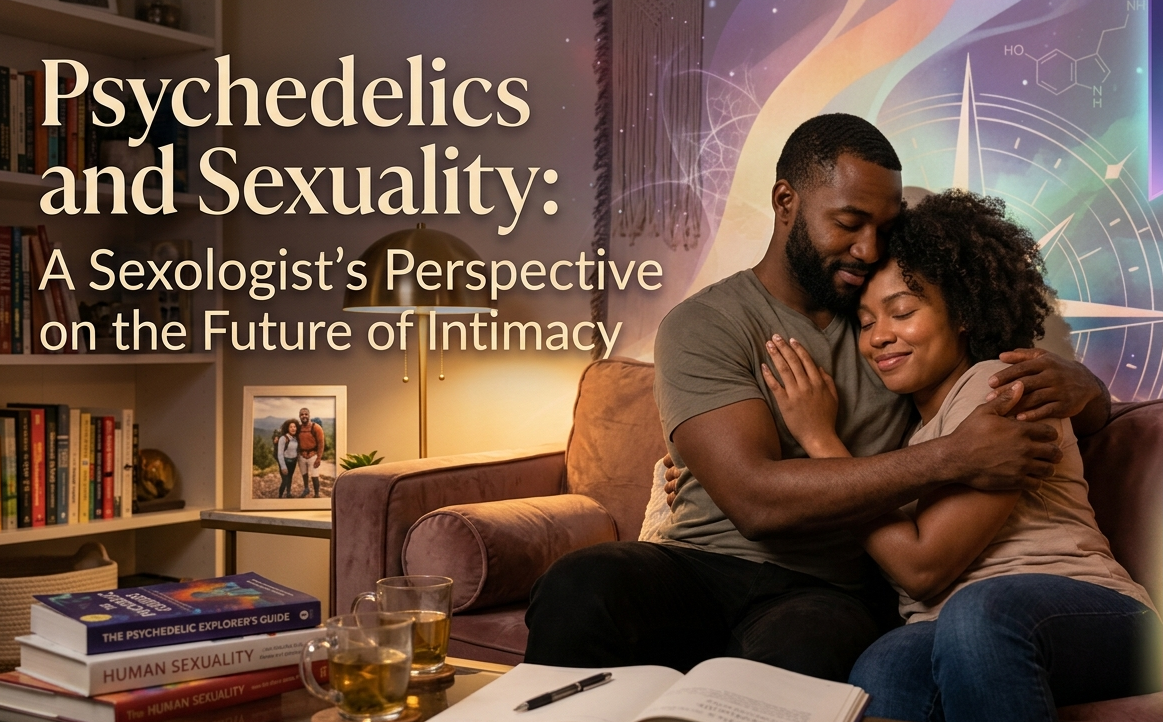
The conversation around psychedelics has shifted dramatically over the past few years. Once viewed almost exclusively through the lens of counterculture, substances like psilocybin, MDMA, and LSD are now being explored in clinical settings for their potential to treat depression, PTSD, anxiety, and trauma.
But beneath the mainstream conversation lies another emerging field of interest: the relationship between psychedelics and human sexuality.
As a sexologist, this area is particularly fascinating because so many sexual struggles are deeply connected to the mind. Intimacy issues rarely exist in isolation. They are often tied to fear, shame, anxiety, body image, emotional disconnection, or unresolved trauma. Modern research is beginning to explore whether psychedelic-assisted therapy could help individuals reconnect not only with themselves, but also with pleasure, vulnerability, and emotional closeness.
Why Researchers Are Paying Attention
Many psychedelics appear to temporarily quiet the brain’s Default Mode Network, often referred to as the “ego center.” This can reduce self-criticism, overthinking, and emotional defensiveness while increasing openness, emotional flexibility, and presence.
From a sexual wellness perspective, those shifts are significant.
Healthy intimacy depends on safety, trust, communication, embodiment, and emotional availability. When someone is trapped in performance anxiety, fear, or shame, genuine connection becomes difficult. Psychedelics may create temporary psychological conditions where those barriers soften enough for therapeutic breakthroughs to occur.
This is one of the reasons researchers and therapists are becoming increasingly interested in their potential role within sexual healing and relational therapy.
MDMA and the Healing of Sexual Trauma
Among the most promising areas of research is MDMA-assisted therapy for trauma recovery.
MDMA is known for increasing feelings of empathy, trust, emotional safety, and connection while reducing fear responses. In therapeutic settings, this may help individuals process painful memories without becoming emotionally overwhelmed.
For survivors of sexual trauma, that can be profoundly important.
Many sexual difficulties, including intimacy avoidance, low desire, vaginismus, erectile dysfunction rooted in fear, and emotional numbness, can stem from unresolved traumatic experiences. MDMA-assisted psychotherapy is being explored as a way to help individuals rebuild a healthier relationship with their body, emotions, and intimacy.
The goal is not simply symptom relief. It is emotional reintegration.
Psilocybin and Emotional Connection
Psilocybin, the active compound found in “magic mushrooms,” is also gaining attention for its impact on emotional openness and relationship dynamics.
Some researchers believe psilocybin may help reduce internal self-monitoring and ego-driven fear, allowing individuals to become more emotionally present and connected.
For couples, this can translate into:
- Deeper emotional conversations
- Reduced judgment and defensiveness
- Greater vulnerability
- Improved communication around sexual needs
- Reduced performance anxiety
In some therapeutic contexts, participants report feeling emotionally “reconnected” to both themselves and their partners in ways they had not experienced for years.
While research is still early, the implications for relationship therapy and sexual wellbeing are significant.
The Sensory Dimension of Psychedelics
Another area receiving attention is the enhancement of sensory perception.
Some individuals report heightened physical sensitivity, emotional intensity, and increased awareness of touch during psychedelic experiences. While this area sits closer to personal exploration than clinical treatment, it highlights how deeply psychedelics may influence the connection between mind, body, and sensation.
However, this is also where ethical boundaries become especially important.
Clinical professionals continue to emphasize that these substances should not be viewed as shortcuts to better sex or emotional intimacy. Without proper preparation, support, and integration, psychedelic experiences can also be psychologically destabilizing.
The Most Important Part: Integration
Perhaps the most misunderstood aspect of psychedelic therapy is that the substance itself is not the healing.
The experience may open emotional doors, but lasting transformation comes from integration — the process of understanding, processing, and applying those insights in everyday life.
This is where trained therapists and sexologists play a critical role.
A powerful experience means very little if someone cannot translate it into healthier communication, emotional safety, self-awareness, and sustainable intimacy patterns afterward.
A Field Still in Its Early Stages
The research surrounding psychedelics and sexuality is still evolving. While the early findings are promising, there is still much we do not fully understand.
What is becoming increasingly clear, however, is that sexuality is deeply psychological, emotional, and relational. Approaches that address those deeper layers may eventually reshape how we think about sexual wellness and healing altogether.
For now, the future appears less focused on recreational experimentation and more centered on ethical, clinically supervised, trauma-informed therapeutic applications.
And that future is arriving faster than many expected.
