
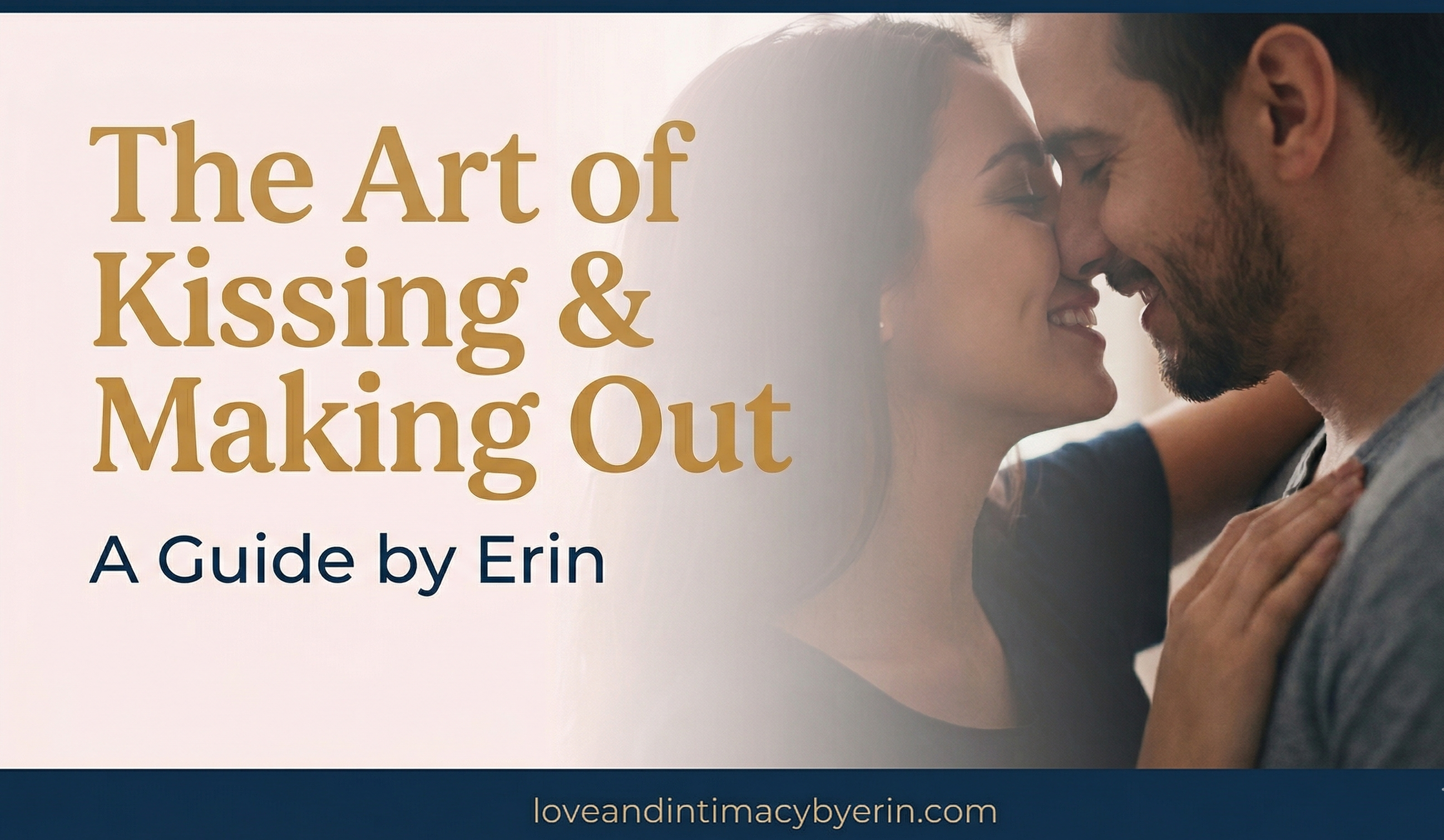
By Ms. Erin, Clinical Sexologist
Let’s be honest. Nobody taught us how to kiss.
We figured it out through nervous teenage encounters, awkward first dates, and a lot of silent hoping the other person didn’t notice what we were doing wrong. And yet, kissing is arguably one of the most powerful tools for intimacy, attraction, and connection you have in your entire relationship toolkit.
As a clinical sexologist, I’ve heard it all in my practice: “The chemistry was there, but the kissing was just… off.” Or: “We’re great in bed, but I don’t know why I don’t want to kiss them anymore.” Kissing tells us everything. It’s the first language of physical intimacy, and most of us never actually learned to speak it fluently.
Today, we’re fixing that.
Why Kissing Actually Matters
Kissing is neurologically rich. When you kiss someone, your brain releases a cocktail of chemicals, dopamine, oxytocin, serotonin, that drive attraction, bonding, and pleasure. Research shows kissing can even serve as a mate-selection tool; many people report losing attraction after a bad first kiss, even if everything else felt right.
In long-term relationships, kissing is often the first thing to go, and its absence is quietly corrosive. Couples who stop kissing (really kissing, not the obligatory peck goodbye) frequently report feeling more like roommates than partners.
So yes: kissing is worth getting right.
Kissing Around the World
Before we get to technique, here’s some important context — kissing is not universal. What feels romantic and natural to you is deeply shaped by your cultural background.
| Region / Culture | Common Practice | What It Signals |
|---|---|---|
| Western Cultures (N. America, Europe) | Open-mouth “French” kissing in romantic contexts; quick pecks as greetings | Romantic initiation, courtship, sexual arousal |
| Japan | Romantic kissing kept very private; public displays are rare | Intimacy is personal — not for public consumption |
| Māori (New Zealand) | Hongi — pressing noses and foreheads together | Sharing the “breath of life”; profound spiritual connection |
| Inuit | Kunik — pressing nose and upper lip to skin and gently inhaling | Deep affection between family and lovers |
| Much of Africa & Middle East | Cheek kisses for platonic greetings; romantic kissing kept private | Clear distinction between social greeting and intimate connection |
The takeaway: Never assume your partner’s kissing “language” matches yours. A conversation, or at least tuning into their cues, goes a long way.
The Most Common Kissing Mistakes (And How to Fix Them)
Nobody wants to hear they’re a bad kisser. But in my clinical experience, most kissing issues aren’t about skill — they’re about awareness. Here are the most common complaints I hear, and the practical fix for each:
| The Problem | The Fix |
|---|---|
| Bad breath | Non-negotiable hygiene first. Brush, floss, mouthwash. Watch garlic and alcohol before intimacy. Keep mints on hand. |
| Too much tongue, too fast | Start with lips only. Introduce the tongue slowly and follow your partner’s lead. This is a conversation, not a monologue. |
| Mouth too wide open | Soft lips, gentle suction. Think tender and controlled, not a vacuum cleaner. |
| Excessive saliva | Slow your pace. Take short breaks for lighter kisses. Let your body regulate naturally. |
| Stiff, awkward hands | Hands are part of the kiss. Cup the face, run fingers through hair, rest on the neck or upper back. Movement signals presence. |
| Rigid body posture | Unclench. Breathe. A great kiss is a full-body experience, let your hips and torso participate. |
| Unexpected biting | Unless you know they love it, skip the biting. If you introduce a nibble, keep it light on the lower lip only. Communicate first. |
The Step-by-Step Guide to a Great Kiss
Step 1: Start With the Foundation, Hygiene and Headspace
Good oral hygiene is non-negotiable. Fresh breath, clean skin, no shortcuts. Beyond the physical, your mental state matters just as much. Anxiety creates stiffness, and stiffness kills chemistry. Before leaning in, take a breath. Slow down. You don’t need to plan three moves ahead — presence is the skill.
Step 2: Read the Room (and Their Body)
The best kisses are never forced. Look for these green lights before you move in:
- The lean-in — their body or head moving closer to yours
- Light touch — a hand on your arm, your leg, or your face
- Exposure — tilting their head, exposing their neck, subtle lip-licking
- Eye contact — soft, sustained gaze with a slight smile
- Guiding — physically moving your hand to where they want it
Consent doesn’t have to be a formal conversation. Bodies speak clearly when you’re paying attention.
Step 3: Start Slow, Build Anticipation First
This is where most people rush and lose the magic.
Don’t lead with your tongue. Begin with feather-light lip grazes. Brush your nose across their cheek. Place small kisses at the corner of their mouth, their temple, the curve of their jaw. Kiss along the neck or behind the ear — these are highly sensitive areas that build anticipation beautifully.
The rule: make them want more before you give more.
Step 4: Deepen Gradually, Listen to Their Mouth
Here’s something most people don’t realize: the way your partner is kissing you is the way they want to be kissed. Pay attention.
- Are they using their tongue? Respond in kind, gently, rhythmically.
- Are they keeping it slow and soft? Match that energy.
- Are they pulling you closer? Increase your intensity.
When introducing open-mouth kissing, trace the outline of their lips lightly with your tongue first, a quiet invitation. Then move into a deeper kiss with slow, reciprocal tongue movement. Think dance, not debate.
Step 5: Engage Your Whole Body
A great make-out session isn’t just lips. It’s full-body presence:
- Hands in hair — one of the most universally loved sensations
- Cupping the face — intimate, tender, attentive
- Hands at the neck or lower back — pulls them in, signals desire
- Gentle nibbling on the lower lip — playful and arousing
- Neck kisses — explore from behind the ear down to the collarbone
Beyond First Base: Full-Body Passion
Once you’ve established a connected, confident kiss, the body opens up as your canvas. The lips are just the entry point.
The neck, ears, collarbone, shoulders, and the small of the back are all erogenous zones that respond beautifully to kisses, breath, and light touch. A slow trail of kisses down the neck to the collarbone can be more arousing than rushing straight to sexual touch.
The key principle here is the same as in every other area of intimacy: slow down, tune in, and let curiosity lead.
Final Thoughts
Kissing is not a minor detail. It’s a primary language of desire, connection, and intimacy. Whether you’re navigating a new relationship or rekindling one that’s been running on autopilot, improving the quality of your kissing is one of the highest-return investments you can make in your intimate life.
Approach it with presence, patience, and a genuine interest in your partner’s experience and you’ll find that getting past first base is never just about what comes next. Sometimes, the kiss itself is the destination.
Ms. Erin is a clinical sexologist and relationship consultant. For private consultations, visit loveandintimacybyerin.com.
