
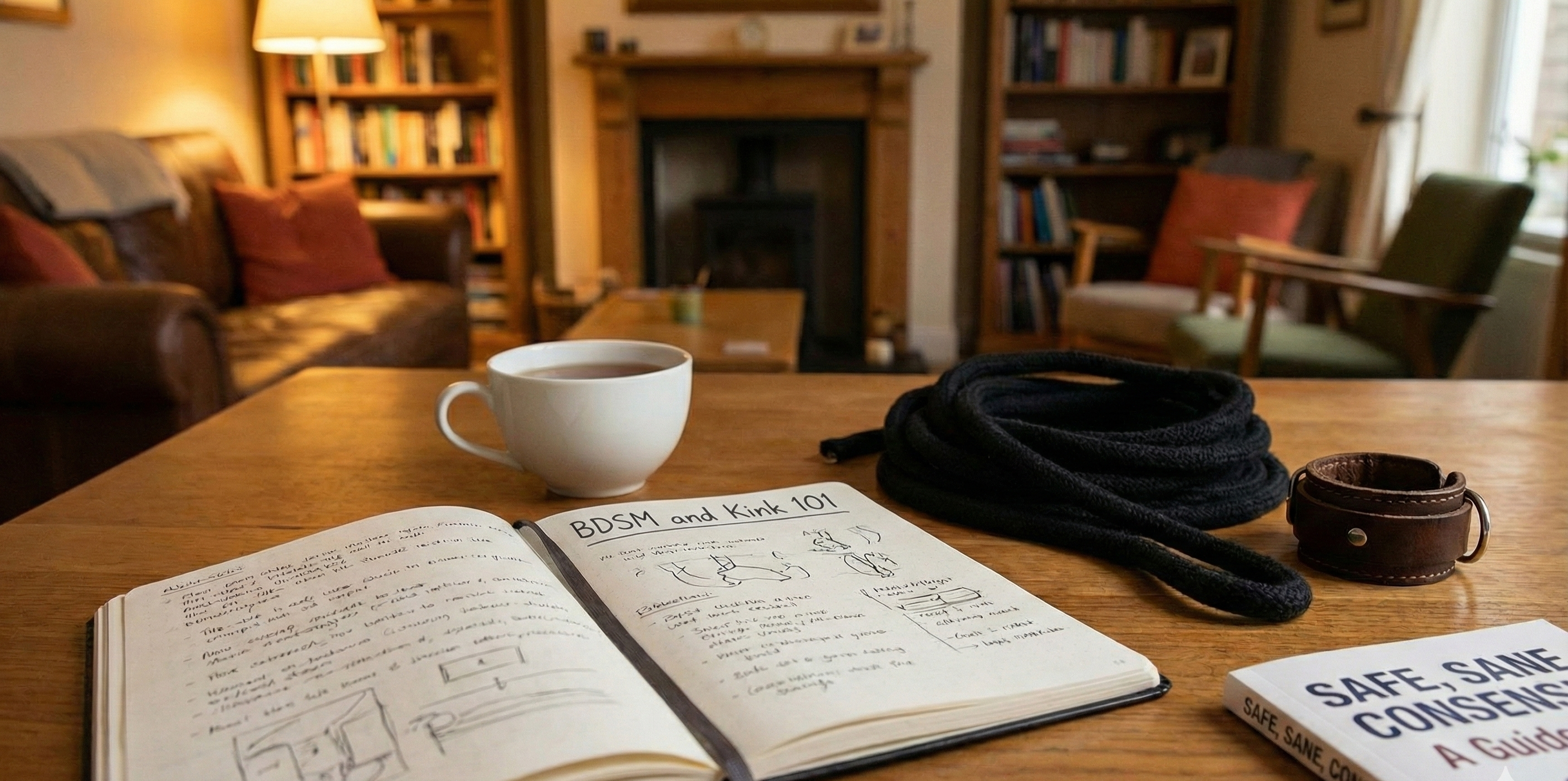
BDSM has moved far beyond stereotypes of whips, chains, and leather. Today, it is widely recognized as a consensual, psychologically rich, and deeply communicative form of intimacy. For many, BDSM is a pathway to self-discovery, empowerment, pleasure, and emotional depth.
If you’ve ever been curious about kink, you’re not alone. Searches for “BDSM meaning,” “dominant and submissive roles,” and “how to explore kink safely” are at an all-time high.
This guide breaks everything down clearly, safely, and respectfully.
What is BDSM? A Simple Breakdown
BDSM is an umbrella term that includes:
Bondage
Discipline
Dominance
Submission
Sadism
Masochism
It can involve psychological play, physical sensation, role dynamics, and emotional connection. Not every BDSM practice involves all components, and every relationship builds its own version based on comfort and consent.
Understanding BDSM Identities: Dominant, Submissive, Switch
Most people exploring BDSM identify with one or more of these roles:
Dominant (Dom/Domme)
Leads the dynamic. Provides structure, direction, or control — physically, emotionally, or psychologically.
Submissive (Sub)
Chooses to follow the Dominant’s guidance. A sub always has agency and participates in creating boundaries and consent.
Switch
Moves between dominant and submissive roles depending on the situation, partner, or mood.
These identities are fluid. You might identify differently with different partners or at different stages of life.
Core Elements of BDSM Explained
1. Bondage
Restricting movement through handcuffs, rope, scarves, etc.
Bondage enhances:
- Trust
- Somatosensory awareness
- Sensation
- Emotional intimacy
This is closely connected to embodiment, the felt experience of being in your body.
2. Discipline
A set of pre-agreed rules and consequences designed for structure, not punishment.
It can be:
- verbal
- behavioral
- physical
- ritualistic
Bondage can be part of discipline, but doesn’t have to be.
3. Dominance & Submission (D/s)
The psychological heart of BDSM.
Dominance may include:
- Giving instructions
- Setting rules
- Guiding actions
- Taking psychological or erotic leadership
Submission might include:
- Following instructions
- Surrendering control
- Receiving direction
- Engaging with trust
Here, communication is everything. D/s is consensual empowerment, not control without permission.
4. Sadism & Masochism (S/M)
Sadism: deriving pleasure from giving consensual sensation or pain.
Masochism: deriving pleasure from receiving consensual sensation or pain.
This can include:
- Light play (e.g., scratching, impact play)
- Emotional or role-based intensity
- Deep sensation exploration
Absolute rule: consent is the foundation.
Any activity stops the moment someone feels uncomfortable.
What Counts as Kink?
Kink is any non-traditional sexual interest or practice, including fantasy, power dynamics, sensory play, or role play.
Kink is a spectrum.
It includes:
- Rope play
- Restraints
- Role-based dynamics
- Sensory deprivation
- Temperature play
- Light impact play
- Orgasm control
And much more, but always within consent.
Kink does not always involve pain, dominance, or submission.
It simply means you’re exploring beyond “vanilla.”
Common Questions About BDSM: Answered by a Sexologist
1. How is consent handled in BDSM?
Consent is the core of BDSM — without it, there is no BDSM.
Healthy BDSM uses:
- Clear communication
- Defined boundaries
- Mutual agreement
- Safe words
- Ongoing check-ins
BDSM consent includes:
- Soft limits: “Maybe, depending on mood.”
- Hard limits: “Absolutely not.”
Consent is never final. It can always be withdrawn instantly at any stage.
2. Can BDSM be part of “vanilla” sex?
Yes. Most people incorporate kink without even labeling it.
Examples:
- Light biting
- Sensual restraint
- Dirty talk
- Power teasing
- Blindfolds
BDSM is a mindset, not a set of tools.
3. Does trauma lead to an interest in BDSM?
No.
BDSM is not caused by trauma.
However, for trauma survivors, the structure and communication of BDSM can provide:
- A sense of control
- Emotional safety
- Reconnection with the body
- Grounded, regulated exploration
But this must be done with trained support and clear boundaries.
4. Are people in non-monogamous relationships usually in BDSM?
Not necessarily.
There is overlap, but they are separate communities with distinct goals.
5. How do I start exploring BDSM safely?
Beginners should:
- Read reputable educational content
- Take workshops (online or local)
- Talk with a sex educator or therapist knowledgeable about BDSM
- Join community groups for support
- Start slow, communicate often, and set limits clearly
Good educational platforms include:
FetLife (community), Recon (community), kink blogs, and verified educational sites.
Is BDSM Right for You? Here’s How to Know
You may be inclined toward BDSM if:
- You enjoy power dynamics
- You crave sensory intensity
- You find structure erotic
- You’re curious about new forms of intimacy
- You want deeper emotional connection
- You’re interested in psychological play
- You’re excited by novelty or exploration
Or simply: you want to understand yourself more deeply.
Remember: there is no “right way” to be kinky.
Curiosity alone is valid.
Final Thoughts: BDSM Is About Connection, Consent, and Curiosity
BDSM is not about pain, punishment, or extremes.
At its heart, BDSM is:
- Communication
- Consent
- Trust
- Exploration
- Emotion
- Connection
- Embodiment
For many, it becomes a pathway to deeper intimacy with themselves and their partners.
If you’re beginning your journey, take it slow, stay informed, and lead with consent.
Curiosity is the first step. Education is the second. Self-awareness is the third.
The rest is a journey uniquely yours.
