
When Politics Reflects Personal Values
Political opinions are rarely just opinions, they’re expressions of deeply held beliefs and lived experiences.
Take, for example, one partner who passionately supports social welfare programs. To them, it’s not just about policy; it’s about compassion, empathy, and a collective sense of responsibility. They might have witnessed hardship up close or believe in building a society where no one is left behind.
On the other hand, a partner who advocates for limited government and personal freedom may hold values of independence, self-reliance, and entrepreneurial spirit. To them, excessive government control may feel like a barrier to innovation and personal growth.
When couples look beyond what they believe and explore why they believe it, conversations shift from confrontation to curiosity. Instead of clashing over policies, they begin uncovering the moral frameworks that shape each other’s worldviews — a pathway to genuine understanding and respect.
The Unexpected Benefits of Political Dialogue
Contrary to popular belief, political conversations don’t have to tear couples apart. In fact, they can strengthen the relationship, if approached with respect and emotional maturity.
Healthy political dialogue reveals how your partner thinks, processes information, and handles disagreement. Do they lean on facts or emotions? Do they seek common ground, or hold firm in their convictions? How do they respond to perspectives they don’t share?
These conversations also uncover your partner’s empathy and moral compass. Do they care about fairness and justice? Can they listen without dismissing? Do they express compassion even for those they disagree with?
When done right, political discussions become an exercise in emotional intelligence. They test a couple’s ability to communicate deeply, listen actively, and maintain affection amid disagreement, skills essential for any long-lasting relationship.
When Political Differences Become Divisive
Of course, the opposite is also true. Political discussions can become emotional minefields if handled poorly. When one partner feels dismissed, unheard, or attacked for their beliefs, resentment quickly follows.
It’s not always the difference in opinions that causes the damage, but how those opinions are expressed. Contempt, ridicule, and stubborn defensiveness can erode trust faster than any ideological divide.
In some cases, political beliefs reveal more fundamental differences in core values. If one person prioritizes equality and social safety nets, while the other sees those values as counterproductive, it can highlight a deeper misalignment that goes beyond politics. Recognizing this early, before resentment takes root, is critical.
The Wisdom of Early Conversations in Dating

For those navigating the dating world, addressing political views early on can save emotional turmoil later. It’s not about grilling someone on their voting record, but about understanding how they think and engage with differing opinions.
Ask yourself:
- Do they shut down when challenged?
- Can they listen respectfully even when they disagree?
- Do they show curiosity, or do they default to defensiveness?
These are indicators of emotional maturity and communication style, qualities that matter far more than whether you tick the same political boxes. Compatibility in values and respect will always outweigh perfect ideological alignment.
Fostering Empathy and Expanding Perspectives
Approaching political discussions with empathy is not only good for the relationship, it’s transformative on a personal level. When you ask thoughtful questions and truly listen, you gain insight into the fears, hopes, and experiences that shape your partner’s worldview.
This process builds emotional depth and broadens understanding. It encourages both partners to step outside their mental echo chambers, challenge assumptions, and develop a more nuanced view of the world.
As a sexologist might say, the same principles that sustain emotional and physical intimacy, active listening, mutual respect, and a safe space for expression, also sustain political dialogue.
The goal isn’t to change your partner’s mind. It’s to understand the heart behind their beliefs and ensure both voices are valued.
Final Thoughts
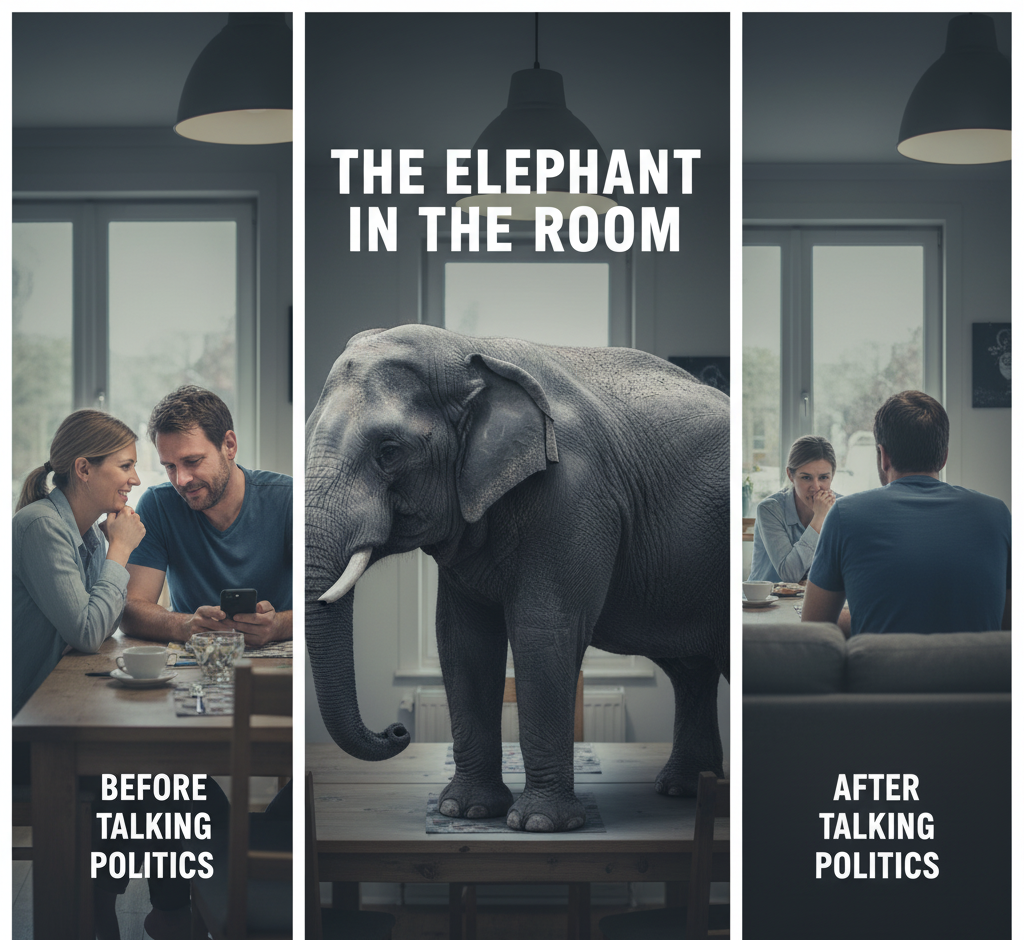
Talking politics in relationships doesn’t have to be the elephant in the room. When handled with care, curiosity, and empathy, these conversations can become a bridge rather than a barrier.
Couples who can disagree without disconnecting build something rare, a relationship grounded in trust, intellectual respect, and emotional resilience. And that, ultimately, is what keeps love strong, even when the world feels divided.
What about you, have political differences ever impacted your relationship, for better or worse?
Let’s talk about how love and politics can coexist with respect and understanding.
