When it comes to sexual health and intimacy, the world can feel like an alphabet soup of titles, therapists, coaches, counselors, educators, and sexologists. So if you’ve ever wondered “What’s the difference between a Sex Coach and a Clinical Sexologist?”, you’re not alone. Let’s break it down in a way that’s easy (and fun) to understand.
1. The Focus: Present Pleasure vs. Past Pain
Sex Coach:
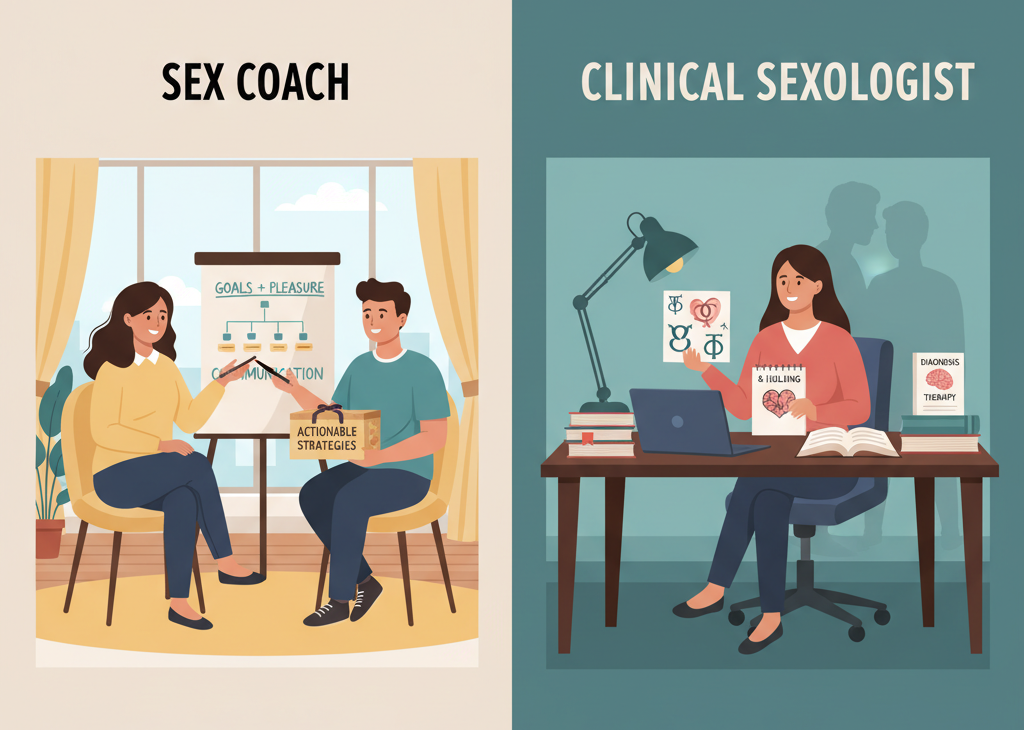
Think of a sex coach as your personal trainer for pleasure. They help you set goals, develop skills, and build confidence, whether that’s improving communication with your partner, exploring new forms of intimacy, or learning to connect more deeply with your own body. It’s practical, empowering, and forward-focused.
Clinical Sexologist:
Now, if a sex coach is your trainer, a clinical sexologist is more like a specialist doctor. They dive deeper into the whybehind your challenges. They’re trained to diagnose and treat sexual dysfunctions like low desire, arousal issues, sexual pain, trauma, or addiction. Their work often includes exploring the past to heal what’s been blocking your present.
2. Training: Certification vs. Clinical Degree
Sex Coach:
Training for sex coaches can vary, from certification programs and workshops to mentorships and self-study. The focus is often on practical skills, communication, and real-world application. Some sex coaches also integrate holistic practices like mindfulness, somatic awareness, or relationship coaching.
Clinical Sexologist:
On the other hand, clinical sexologists usually hold a Master’s or Doctorate in sexology or a related field. Their education is more research-based and includes supervised clinical experience. They often come from healthcare backgrounds, therapists, psychologists, doctors, or nurses who specialize in human sexuality.
3. Scope of Work: Empowerment vs. Treatment
Sex Coach:
A sex coach helps you enhance what’s already working and expand what’s possible. Common focus areas include communication, pleasure mapping, confidence, desire exploration, and education. You don’t need to have a “problem” to see a sex coach, curiosity and growth are reason enough.
Clinical Sexologist:
Clinical sexologists work with more complex or distressing issues, like sexual trauma, pain disorders, or mismatched desire levels. They use evidence-based therapeutic techniques to help clients heal, rebuild trust, and reclaim sexual well-being.
4. Regulation: Who’s Licensed?
Sex Coaching is largely unregulated, there’s no universal licensing board. This means credentials and training can vary widely, so it’s important to research your coach’s background and reputation.
Clinical Sexology, on the other hand, usually involves licensed healthcare professionals with specialized training in sexual health. You can expect a more structured and medically informed approach.
5. Who They Work With
Sex Coaches: Individuals or couples looking to spice things up, communicate better, or learn new skills.
Clinical Sexologists: Individuals or couples struggling with significant sexual problems, trauma, or medical concerns.
| Feature | Sex Coach | Clinical Sexologist |
|---|---|---|
| Focus | Goal-oriented, present and future-focused, skill-building, education | Diagnosis and treatment of sexual dysfunctions, past-oriented, deeper issues |
| Training | Varies widely, often certification programs, workshops, self-study | Master’s or Doctoral degree in sexology or related field, supervised practice |
| Scope of Work | Improving communication, enhancing pleasure, exploring desires, education | Addressing sexual pain, arousal disorders, desire discrepancies, trauma, addiction |
| Regulation | Largely unregulated, no standard licensing | Often licensed healthcare professionals (e.g., therapists, doctors) with specialized training |
| Clientele | Individuals or couples seeking to enhance their sexual lives | Individuals or couples experiencing significant sexual problems or distress |
Personal Benefits of Becoming a Sexual Health Professional
Whether you choose the coaching path or the clinical route, one thing’s for sure, working in sexual health is one of the most fulfilling, transformative, and socially impactful careers you can have. Here’s why:
- Deepen Your Understanding of Human Sexuality: Learn about one of the most fascinating and diverse aspects of human life.
- Help Others Lead More Fulfilling Lives: Empower individuals and couples to experience authentic connection and joy.
- Break Down Stigmas: Be part of the movement that’s normalizing open, healthy conversations around sex.
- Continuous Growth: This field never stops evolving — there’s always more to learn.
- Diverse Career Paths: From private practice to education, research, and advocacy, your opportunities are endless.
- Personal Development: Cultivate empathy, confidence, and exceptional communication skills.
- Champion Inclusivity: Advocate for people of all orientations, gender identities, and relationship structures.
Curious About Turning Your Passion Into a Profession?
If you’ve ever thought, “I could totally help people in this area, I just need the right training,” then this might be your sign.
Explore the Certified Sex Coaching Program at the Sexology Institute. It’s designed for people who want to blend compassion, education, and empowerment into a meaningful career in sexual wellness.
And if you decide to enroll, mention my name, you’ll be added to my clinical student case study list, which gives you access to exclusive mentorship opportunities and insights from real-world client work.
Final Thought
Whether you’re drawn to the empowering, goal-driven world of sex coaching or the clinical, research-backed depth of sexology, remember: both paths share the same mission — helping people experience healthier, happier, and more fulfilling intimate lives.
So… which one sounds more like you?
