
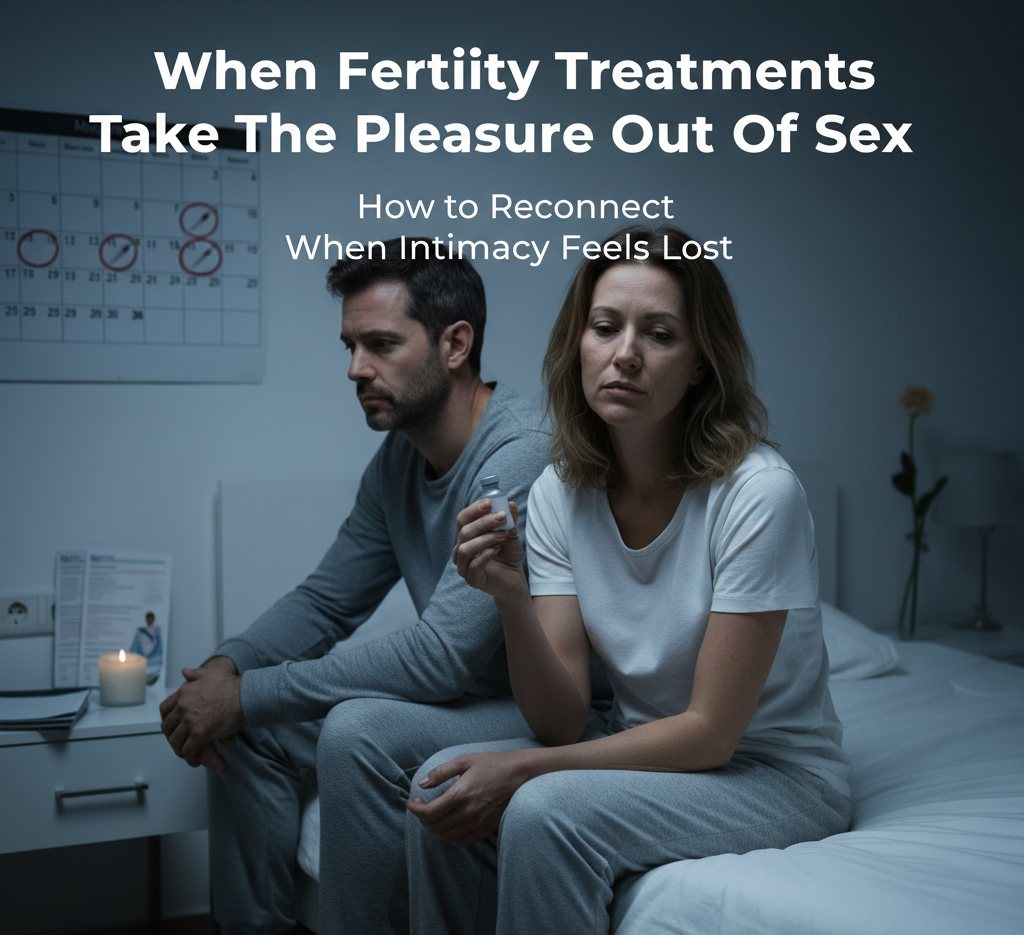
“My body feels like a science experiment.”
“Sex isn’t fun anymore, I actually don’t like it.”
“I’m so disconnected from my own body.”
“We used to enjoy our scheduled sex; now it just feels like a job.”
“I feel broken, like I’ve failed.”
If these thoughts sound familiar, you’re not alone.
As a sexologist, I hear stories like these from couples going through fertility treatments, couples who love each other deeply but feel lost in the process. What once felt spontaneous, passionate, and connected now feels scheduled, pressured, and clinical.
This shift can be one of the most unexpected and painful parts of the fertility journey. Below, we’ll explore why fertility treatments often take the joy out of sex, how this impacts relationships, and most importantly, how couples can find their way back to intimacy.
1. The Medicalization of Sex: When Pleasure Becomes a Procedure
Fertility treatments often transform one of the most intimate parts of a relationship into a medical task.
Sex by the clock: Ovulation tracking and timed intercourse can turn what was once about connection into a strict schedule. When sex becomes another item on a to-do list, it naturally loses its playfulness and spontaneity.
The clinical lens: Fertility introduces doctors, tests, and performance pressures into a space that used to be private. Suddenly, sex isn’t about pleasure, it’s about results. This creates stress and even anxiety, especially for men who feel pressured to “perform” on demand, or women who struggle to feel aroused amid endless procedures.
Invasive procedures and body fatigue: Repeated scans, injections, and medical interventions can make your body feel like it’s no longer your own. For many women, this leads to a sense of physical detachment; for men, the constant pressure to “produce” can lead to resentment, guilt, or emotional shutdown.
💬 “I used to enjoy sex; now it feels like part of a treatment plan.”
2. The Emotional and Psychological Toll
The weight of expectation:
Each treatment cycle carries immense emotional investment. When the stakes are so high, sex can begin to feel like a test, one you might “fail.” When a cycle doesn’t work, it’s not just disappointment; it’s grief. Over time, this emotional rollercoaster can erode desire.
Guilt and self-blame:
When infertility is linked to one partner, feelings of guilt or inadequacy can arise. The partner may withdraw or overcompensate, both of which can create imbalance and emotional distance.
Different coping styles:
Some partners want to talk everything through, while others shut down to cope. Neither is wrong, but if not communicated, these differences can make both partners feel unseen or unsupported.
3. The Disconnect: When Partners Feel More Like Teammates Than Lovers
It’s common for couples in fertility treatment to say they feel like “roommates” or “project managers.”
The emotional intimacy fades, not because the love is gone, but because all energy is directed toward the shared mission of conception.
You stop flirting. You stop touching without purpose. The connection becomes functional rather than emotional, and this can feel deeply isolating.
Protective walls often go up, especially after repeated disappointments. Couples may avoid intimacy altogether to escape the pressure or pain it now brings.
4. How to Reconnect and Rediscover Intimacy

While this phase can be painful, it is absolutely possible to rebuild intimacy and connection — often in deeper, more meaningful ways.
Redefine Intimacy
Not all intimacy is sexual. Rediscover closeness through touch, humor, shared rituals, or simply lying together without expectation.
Explore pleasure in smaller, gentler ways, sensual massage, emotional vulnerability, slow touch, to remind each other that connection is still possible beyond conception.
If you’re exploring ways to reignite connection, deepen pleasure, or rediscover your body after fertility-related stress, consider these educational resources by Kenneth Play, a world-renowned sex educator. His work focuses on practical, science-backed methods to help couples rebuild intimacy and confidence, without pressure or performance.
These tools are especially valuable for women and couples looking to shift from “function” back to feeling:
- Beyond Satisfied Pro Bundle — A complete intimacy program designed for couples to explore deeper connection and pleasure together.
Explore the program here - Beyond Satisfied Pro Course — Offers structured, step-by-step guidance for women to reconnect with their own body and arousal through proven somatic techniques.
Learn more about the course
Talk Openly, Without Judgment
Name what’s happening. It’s okay to admit, “Sex feels stressful right now.” Vulnerability breaks isolation.
Remember, you’re both in this together, not against each other. Honest communication can relieve pressure and replace blame with understanding.
Take “Fertility-Free” Time
Set boundaries around fertility talk. Dedicate certain days or hours where you won’t mention treatments, tests, or appointments.
Go on dates. Laugh again. Reconnect with who you were before fertility took center stage.
Seek Professional Guidance
Sometimes, you need a neutral space to untangle the emotional complexity.
A therapist or sexologist who understands fertility dynamics can help you process resentment, rebuild desire, and develop practical intimacy exercises tailored to your unique situation.
You are not broken. You are navigating one of life’s most emotionally demanding journeys, and you deserve support that honors both your heart and your body.
Fertility treatments challenge not only your body but your identity, your partnership, and your sense of control.
It’s natural to lose touch with pleasure when sex becomes about results, but with awareness, compassion, and small intentional steps, you can reclaim your connection.
Intimacy can return, even stronger than before, not through perfection, but through presence.
