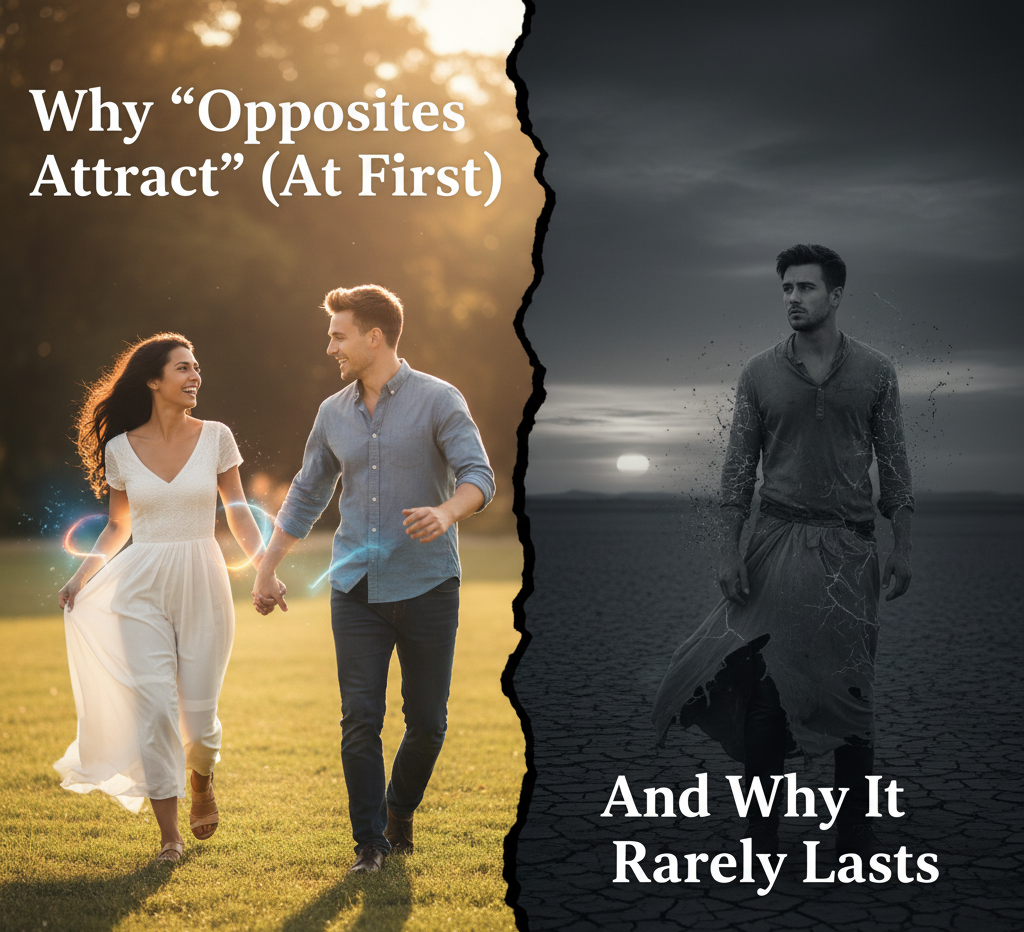
The phrase “opposites attract” has long been romanticized in movies, novels, and popular culture. And truthfully, there’s some validity to it, at least in the early stages of attraction. From a sexologist’s perspective, people are often drawn to differences because they provide novelty, growth, and excitement. But as relationships evolve, those same differences can become points of friction, making it harder to sustain long-term intimacy.
Let’s break down why opposites often spark initial attraction and why, over time, shared values and compatibility matter far more.
The Initial Spark: Why Differences Feel So Enticing
Novelty and Excitement
When someone introduces us to new perspectives, activities, or ways of thinking, it can feel exhilarating. A partner who is unlike us offers variety and unpredictability, two powerful triggers for attraction.
Perceived Balance and Complementarity
Sometimes, we seek out partners who balance out what we lack. An introvert might find energy in an extrovert’s presence, or a cautious person may be drawn to someone adventurous. This creates a sense of “completing each other.”
Personal Growth and Learning
Being with someone different can stretch us out of our comfort zones. New experiences, skills, and viewpoints often lead to personal growth, which feels empowering and rewarding.
Projected Ideal Self
At times, we’re drawn to qualities we aspire to develop ourselves, such as confidence, ambition, or spontaneity. Falling for someone who embodies these traits can feel like moving closer to our “ideal self.”
The Long-Term Reality: Why Commonalities Win
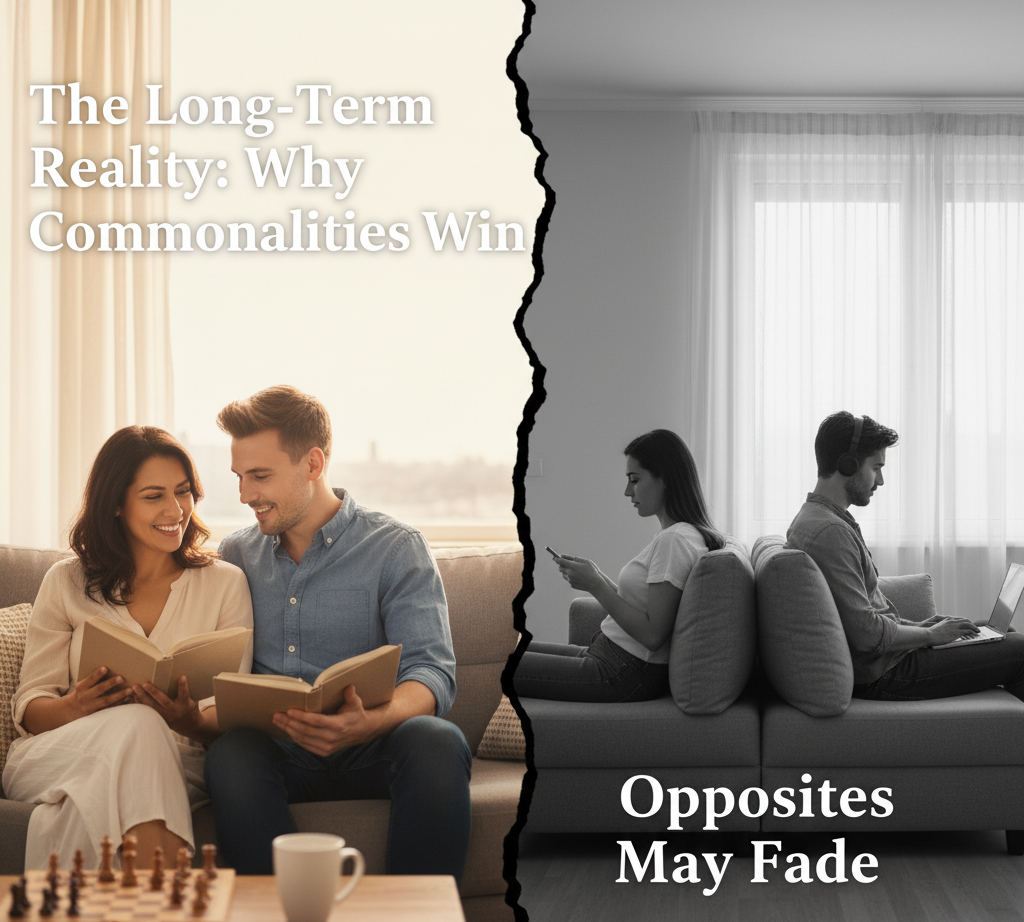
While differences can spark passion, long-term love thrives on shared values and compatibility. Without a strong foundation of common ground, those exciting differences often turn into challenges.
Clash of Core Values
Different views on family, finances, lifestyle, or spirituality can create ongoing conflict. What felt exciting at first may start to feel incompatible later.
Communication Challenges
Mismatched communication styles can lead to misunderstandings. For example, if one partner avoids conflict while the other prefers direct confrontation, unresolved issues can build emotional distance.
Diverging Life Goals
If your visions for the future differ – career, children, or retirement plans it can feel like living parallel lives instead of building one together.
Erosion of Shared Activities
Differences may introduce novelty early on, but without shared hobbies or rituals, couples risk losing opportunities for connection and joy together.
Intimacy and Sexual Compatibility
While differences can create initial sexual spark, long-term satisfaction often depends on a deeper emotional bond and alignment around intimacy. Unmet desires or mismatched expectations can strain sexual connection.
Emotional Labor and Fatigue
Constantly bridging gaps requires effort. Over time, one or both partners may feel drained, “out of sync,” or resentful from carrying the emotional burden of compromise.
The Bottom Line
Opposites may indeed attract, but its shared values, aligned goals, and mutual understanding that sustain love. A lasting partnership is built less on chasing novelty and more on nurturing trust, connection, and intimacy.
If you want to explore ways to deepen your intimacy and strengthen your sexual connection, I recommend these powerful resources:
-
Beyond Satisfied Pro Bundle by Kenneth Play – designed for couples to explore deeper pleasure together
-
Beyond Satisfied Pro Course – masterclass for unlocking sexual confidence and connection
-
FirmTech – innovative solutions supporting men’s sexual health and pleasure
-
JELQ2Grow – with coupon code ERINALEXANDERSE for exclusive savings
-
Or book a 1:1 Intimate Health Consultation with me for tailored support
Attraction may begin with differences, but lasting intimacy grows when couples lean into their common ground, while learning how to navigate, celebrate, and bridge their differences with compassion.
