
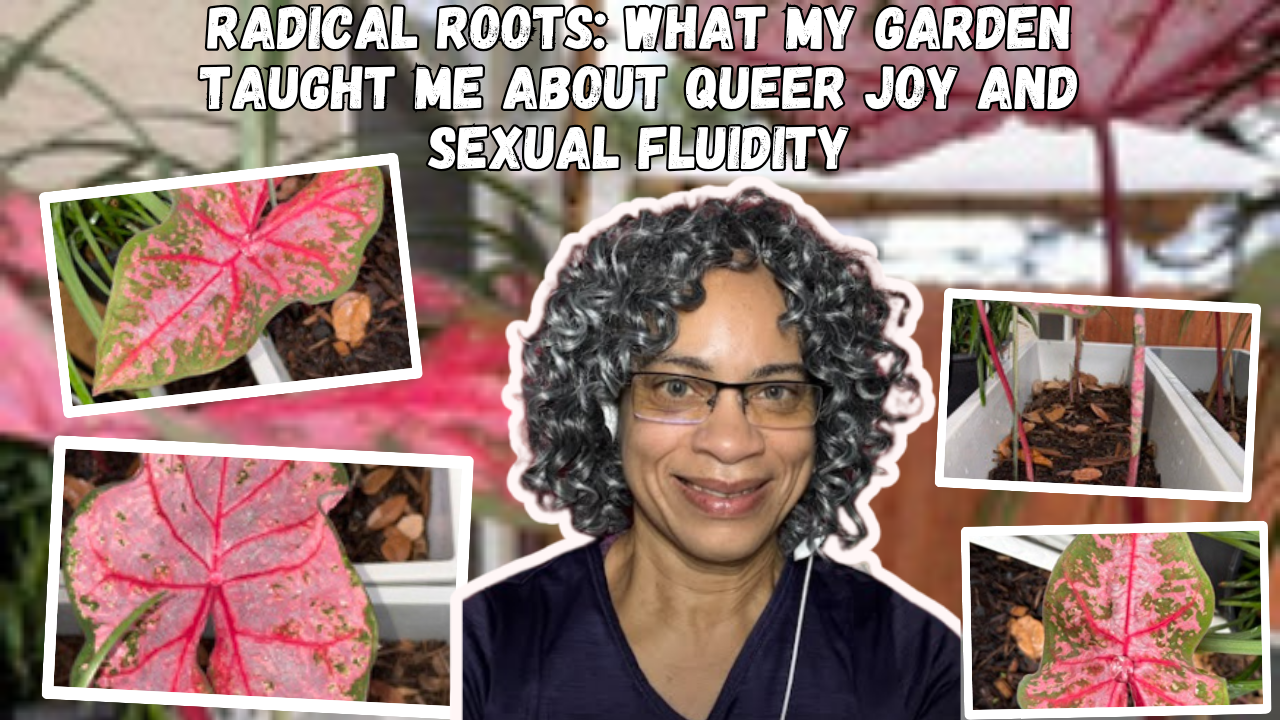
I didn’t expect to find my clinical practice growing in the soil.
When I stepped back from the “clinical machinery” of crisis-oriented therapy, I traded some of that intensity for something slower and more generous, a garden. Cardinal flowers. Solar fountains. The particular quiet of watching something alive do exactly what it needs to do without asking anyone’s permission.
What surprised me was how much the garden kept showing up in my work. Or maybe it was the other way around.
Because here’s what I’ve learned from spending time in the dirt: nature has never once cared about our categories.
Carl Linnaeus and His Scandalous Flower Beds
Most people know Carl Linnaeus as the Father of Taxonomy, the 18th century botanist who gave us our system for classifying plants. What fewer people know is how controversial that system was when it first arrived.
Linnaeus didn’t just use botanical language to describe plant reproduction. He used highly gendered, moralistic terms. He wrote about “husbands” and “wives” sharing the same flower bed. He referred to certain plant structures as “concubines.”
His contemporaries were scandalized, not because he was wrong about the science, but because he forced people to sit with the messy, non-binary reality of how plants actually reproduce. His mistake, though, was projecting the rigid social rulebook of the 1700s onto living systems that had no interest in following it.
Plants don’t do binary. They never have.
What My Garden Actually Looks Like
Walk through my garden and you won’t find a neat division of male and female. The majority of flowering plants are hermaphroditic, what botanists call “perfect flowers,” containing both stamens and pistils in a single bloom. They are self-sufficient. They are fluid. They adapt their expression to what the environment calls for.
This isn’t a metaphor I had to reach for. It’s just what’s growing outside my door.
And it maps almost perfectly onto what I see in my practice every day. Human sexuality and gender identity are generative and evolving, shaped by context, experience, time, and need. When clients come to me feeling “broken” because they don’t fit the narrow categories of Victorian medicine, I think about my garden. Nothing out there is broken. It’s all just part of a much larger, more natural spectrum of diversity.
The Colors We Chose and Why They Fit
Our history as LGBTQ+ people has always been rooted in the natural world, sometimes out of necessity and sometimes out of something deeper than that.
Green carnations became a symbol of queer identity in Victorian London, made famous by Oscar Wilde. Green, in color psychology, signals openness and connection to nature, a quiet reclamation of belonging.
Violets have been associated with Sappho and lesbian identity for centuries, appearing in her poetry as offerings of devotion and intimacy.
Lavender carries perhaps the most layered history. A color associated with calm and higher thinking, it was weaponized during the Lavender Scare to mark queer people as threats. We took it back. We wore it anyway.
There’s something deeply intentional about a community consistently turning to flowers and colors to signal who we are and that we are safe. The natural world was always ours too.
Plant Pride and the Willingness to Fail
One of the things I tell clients most often is that the willingness to fail is the actual secret to thriving. Gardening has taught me to mean it.
Sometimes you plant something in the wrong spot and it wilts. Sometimes the thing that looks like chaos, the coral snake I leave alone in my yard because it belongs to the ecosystem, is exactly what makes the whole space work. The messy bits aren’t problems. They’re part of what makes it alive.
A garden is a safe space for exploration in the same way a good therapeutic relationship is. Both ask you to try something, pay attention, adjust, and try again. Whether you’re solo-exploring your own desires, navigating a polyamorous structure, or stepping into a kink dynamic for the first time, you are not an anomaly. You are part of a spectrum that nature has been modeling for us the whole time.
So get your hands dirty. Ditch the rigid rulebook. Every variation of leaf, stem, and bloom is essential to the garden.
You are no different.
Erin Alexander is a Licensed Professional Counselor Supervisor and Certified Clinical Sexologist. She hosts The Unscripted Equation podcast with co-host Tanya.
